e-Learning examples: Clear and actionable ideas
Explore real-world examples of e-learning that work. From microlearning to gamification, discover which formats fit which goals, and get inspired to use them in your own training.
.avif)
Customer Success Coach at FLOWSPARKS
In learning, one size doesn’t fit all. As a Customer Success Coach at FLOWSPARKS, I work with a wide variety of organizations, each with their own goals, target audiences, and ways of working. To match all these different learning needs, we need a variety of e-learning types. The e-learning examples below show which format fits which goal.
.avif)
In this blog article, I’ll share some real-world learning needs I often come across in my role. For each need, I give you e-learning examples that work well, based on what I've seen succeed in practice. Whether you're designing training for onboarding, compliance, product knowledge, or soft skills, these e-learning examples help you choose the right format for your goal.
What is e-learning and why is it important?
Before we dive a bit deeper in the e-learning world, we need a good understanding of what e-learning is.
E-learning, or online learning, is a form of self-paced training delivered via the internet. It allows learners to complete courses anytime, anywhere, and independently, without the need for a trainer or physical classroom. Everything happens online, giving maximum flexibility to both the learner and the organization.
E-learning is especially valuable when you need to reach large groups: you make training available across different locations and time zones. That makes it possible to support just-in-time learning: give people the opportunity to learn when they need it. But also, to send a consistent message to all your employees. Plus, it helps reduce training costs significantly.
What makes e-learning effective?
E-learning can be attractive and user-friendly, but that’s not enough. The goal is not just to create something nice, but something effective.
To achieve that, it’s essential to align the e-learning with the learning goals and the target audience. Ask yourself:
- What is the purpose of this training?
- What structure makes sense?
- Which knowledge or skills should learners gain?
- Who are the learners, and what do they need?
Therefore, there is no one-size-fits-all approach. Every e-learning should be tailored to fit its specific context.
Equally important is interactivity. Research on active learning consistently shows that learners who engage with content outperform those who consume it passively. Just reading or watching isn’t enough to make the content stick. That’s why it’s important to include interactive elements like questions, scenarios, and feedback to encourage engagement and deeper learning.
When does e-learning fail?
One of the main reasons e-learning fails is a lack of alignment with the specific context.
This can happen in different ways: the target group isn’t taken into account, the chosen format doesn’t match the learning need, or the message is unclear or unfocused.
That’s why it’s so important to start with the basics:
- Why are we creating this e-learning? What is the intended outcome?
- Who is the training for? What are their needs, background, and context?
If you skip these questions, you risk developing something that looks good but lacks real learning impact. Effective e-learning always starts with purpose and relevance.
e-Learning examples that can be used for different learning goals
There are many types of e-learning, each with its own strengths. At FLOWSPARKS, we help organizations meet a wide range of learning needs through various formats, each built around a specific didactic backbone. These ready-to-use formats make it easy to create effective digital training that aligns with your goals, audience, and content. Here is a quick overview, followed by a deeper look at each.
1. Microlearning
Firstly, we have microlearning. Microlearning refers to short, focused digital training that typically takes just three to five minutes to complete. Learners can easily consume these bite-sized modules, which often use a mix of media like video, animation, podcasts, text, or short quizzes. The power lies in its compact and flexible format.
What makes microlearning so valuable is its versatility. Despite the short length, microlearning can serve many goals: knowledge transfer, practice, testing, or reinforcing key concepts. For example: a short video to transfer knowledge, an exercise to adapt what they saw in the video to practice the learning content, or a quick quiz to assess where the team stands.
Because it’s so flexible, microlearning fits well into the daily workflow and can be a powerful tool to reinforce or refresh knowledge over time.
2. Scenario based learning
Secondly, scenario-based learning places the learner in realistic situations and challenges them to make decisions. It’s ideal for practicing behaviour and dealing with real-life challenges.
This type of learning is ideal for topics where context matters, such as handling policy violations, managing difficult conversations, or navigating situations that regularly occur in the workplace. By simulating real challenges, learners can reflect, make choices, and better prepare for similar situations on the job.
3. Video based learning
Thirdly, we have video-based learning. Video-based learning uses video as the main medium to transfer knowledge or demonstrate a process. It’s effective for explanation, showcasing procedures, or even storytelling.
You can make it interactive by adding follow-up questions or decision points. This way, learners stay engaged and better connect theory to practice.
4. Game based learning/gamification
Incorporating game elements in an e-learning module is a good way to motivate people. Game-based learning goes beyond actual games: think of leaderboards, earning badges, scoring points, or interactive quizzes.
It’s often used to increase engagement and help learners practice content repeatedly. The competitive aspect can stimulate active learning.
5. Social learning
With social learning we mean all learning through social interaction and collaboration. It is obvious in a live environment but in a context of e-learning, this might include seeing how others answered a question, using forums, attending webinars, or reading peer reviews. It sparks curiosity, invites comparison, and motivates learners to explore content more deeply.
6. Self reflection
The sixth type worth highlighting is self-reflection: the conscious process of thinking about your own learning, behaviour, thought patterns, and experiences with the goal of gaining insight and improving yourself. It’s not about consuming content but about gaining insight into your own strengths and areas for development. This kind of learning supports personal growth and helps individuals connect learning to their own experiences.
Real-world examples of e-learning: What to use and when
Here are some practical e-learning examples that show how different e-learning types meet different learning needs. In every case, the approach was chosen based on the specific challenge, the target audience, and the desired outcome.
How STORYWISE enhanced policy training
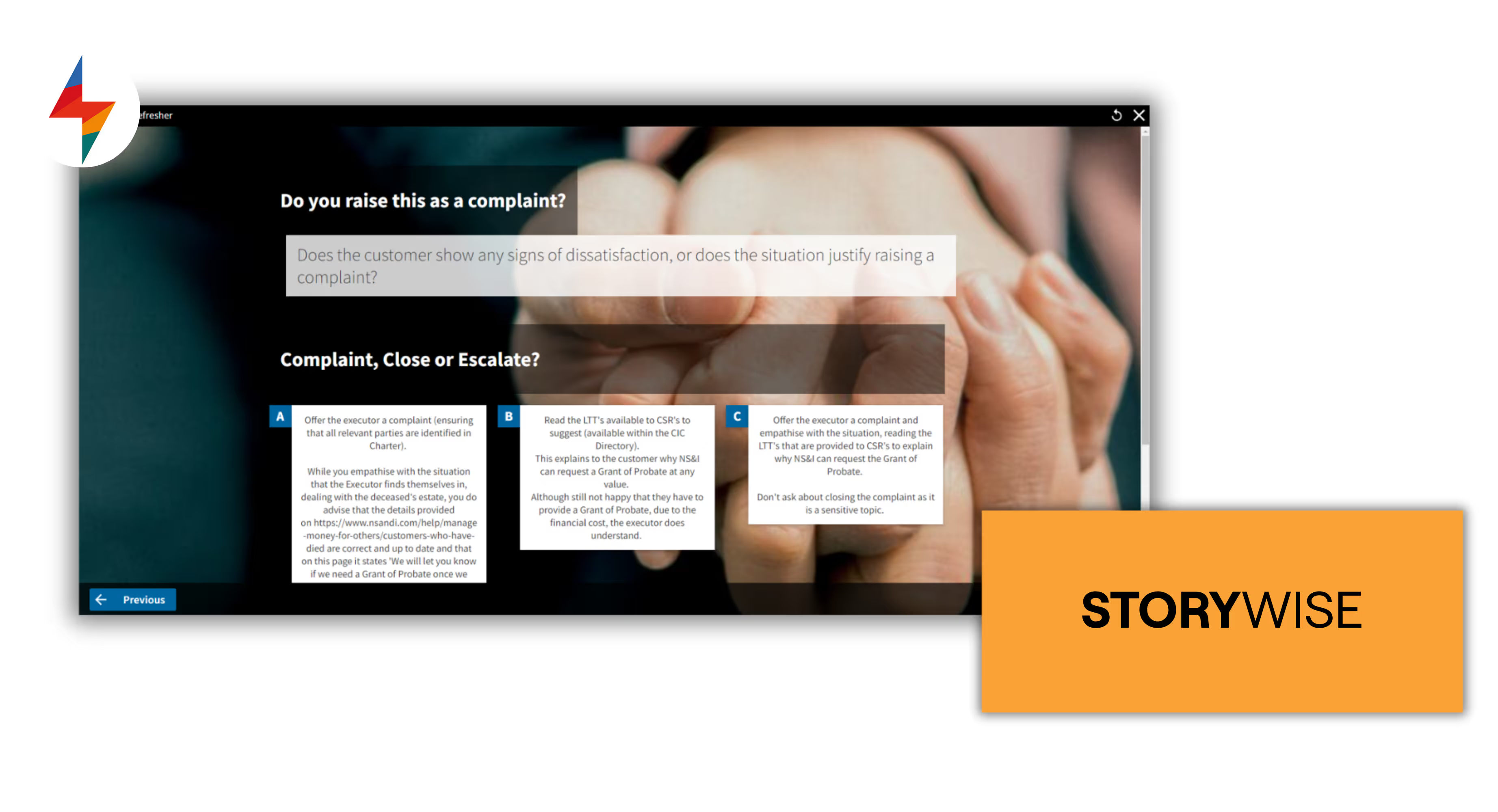
One of our customers had just developed a new code of conduct. During the analysis, it became clear why this update was needed: a series of minor incidents had led the steering committee to tighten the rules. Apart from a short mention during onboarding, there were no concrete actions to support the application of the code.
Therefore, we recommended a narrative format that groups policy rules into themes, each illustrated with a real-life dilemma (STORYWISE). Every topic comes to life through a scenario learners can relate to, encouraging reflection and supporting real-world application. Thanks to this approach, the customer now has a system that not only tracks completion but also brings the code of conduct to life.
Step-by-step software training through microlearning
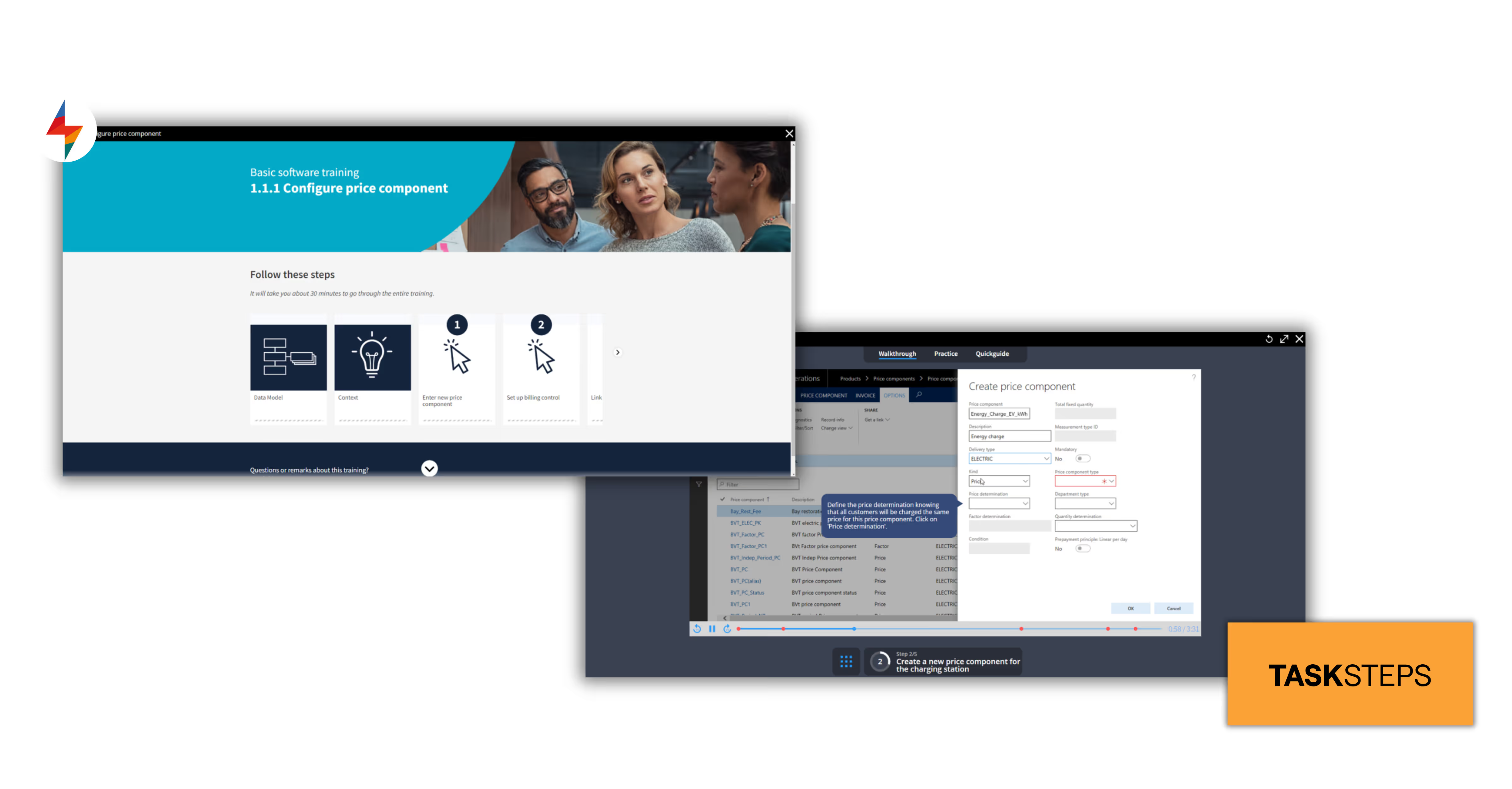
One of our customers introduced new products, which also required an update of the ordering software. Employees needed support not only to understand the new products, but also to work fluently with the updated system.
Together, we identified the key processes and created one case per process. The team developed each case as a step-by-step walkthrough combined with a practice activity on a different realistic scenario (TASKSTEPS). This way, employees could first see how it works and then apply their knowledge in a safe environment.
By breaking down the training into short, targeted modules, we ensured that employees could learn the new software in small, manageable steps, fully in line with the principles of microlearning.
Turning sales product training into fun
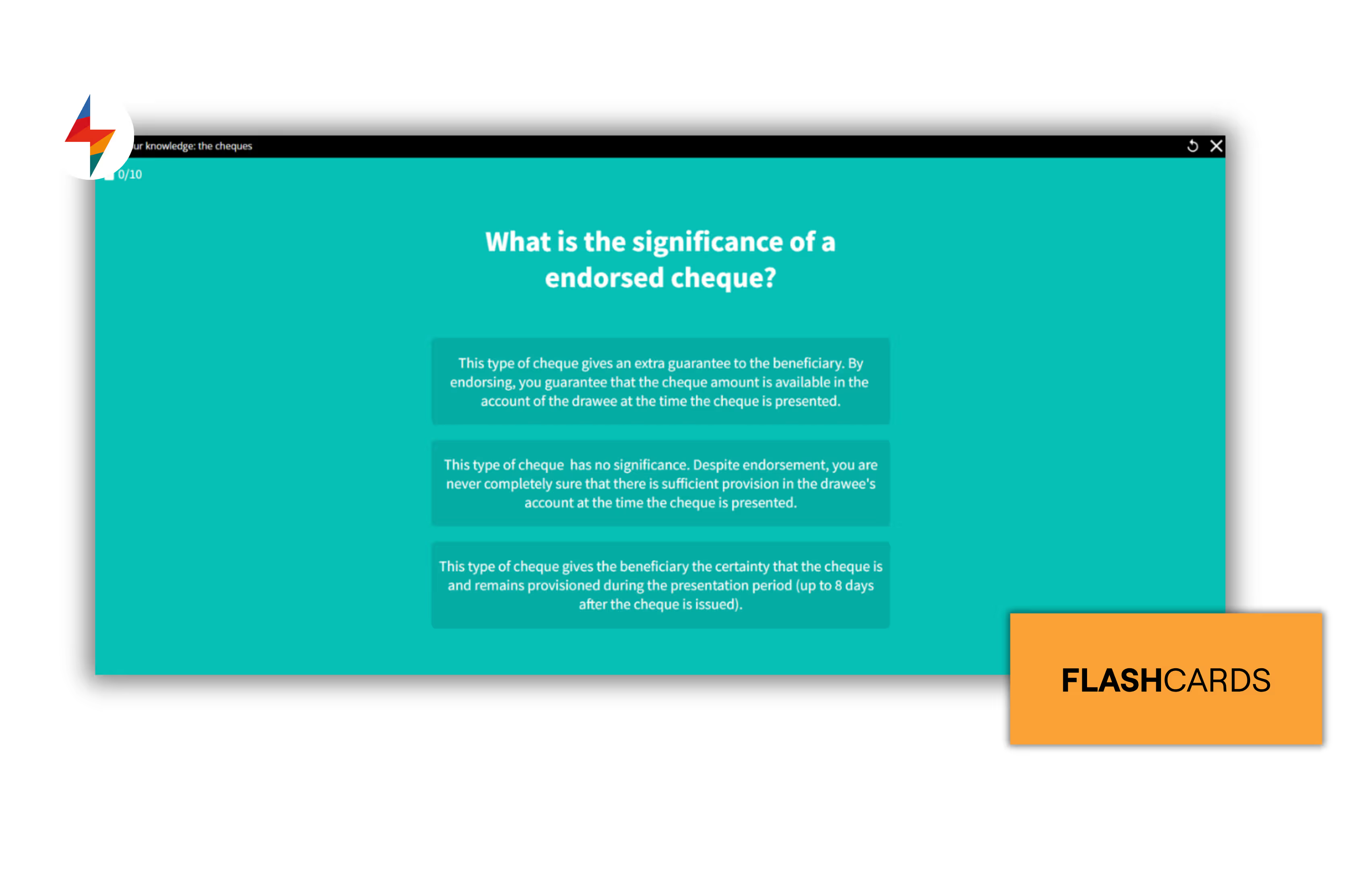
New salespeople found it hard to memorise the many products, features, and applications, despite having fact sheets available. The goal of this customer was ensuring that salespeople could confidently link each product to its use in customer conversations. A competitive knowledge drill where salespeople answer questions and see their score on a live ranking against colleagues (FLASHCARDS) was a perfect fit. The competition and repetition made product knowledge stick. One question had to be answered correctly twice, reducing guessing and increasing engagement.
Salespeople quickly took ownership of the content, motivated by the ranking and eager to apply what they learned in real conversations. FLASHCARDS now helps the customer keep product knowledge sharp through fun, focused learning.
Upskill with a purpose, not overload
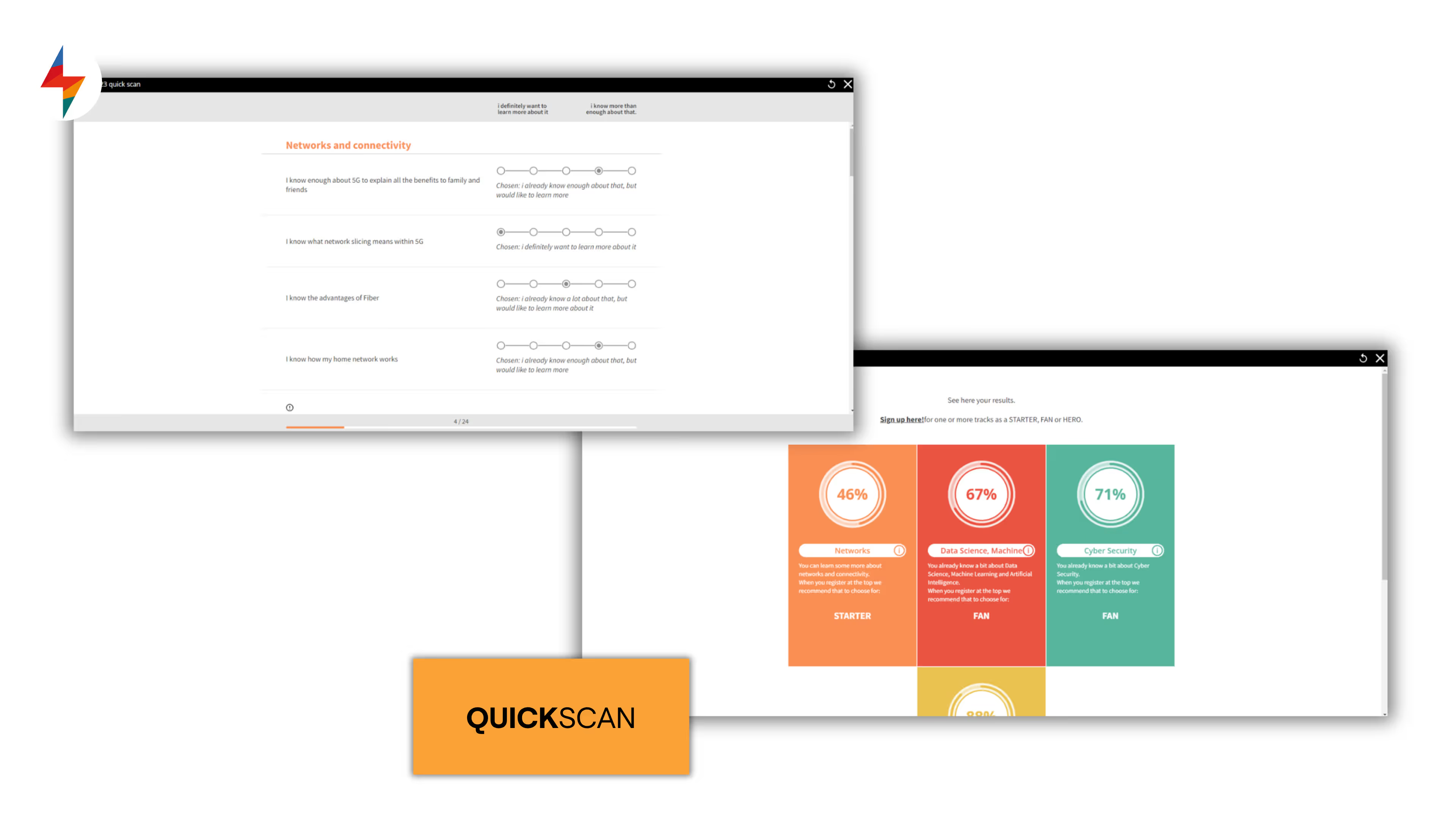
The customer wanted to invest in upskilling and reskilling their employees but in a way that matched individual needs and priorities. They aimed to strengthen knowledge and skills around key topics like artificial intelligence, networking, cloud, and cybersecurity. But soon realised: it’s a lot of information, and not everything is equally relevant for every employee.
To avoid a one-size-fits-all approach, they wanted employees to reflect on their current skill levels and receive tailored training suggestions. That's where a self-assessment format that lets learners rate themselves on key statements and receive a personalized overview of strengths and development points came in (QUICKSCAN). Based on their responses, learners get suggestions for relevant training. By combining self-reflection with targeted recommendations, the customer supports employees in taking ownership of their learning path, while focusing on what matters most.
Support critical thinking in healthcare
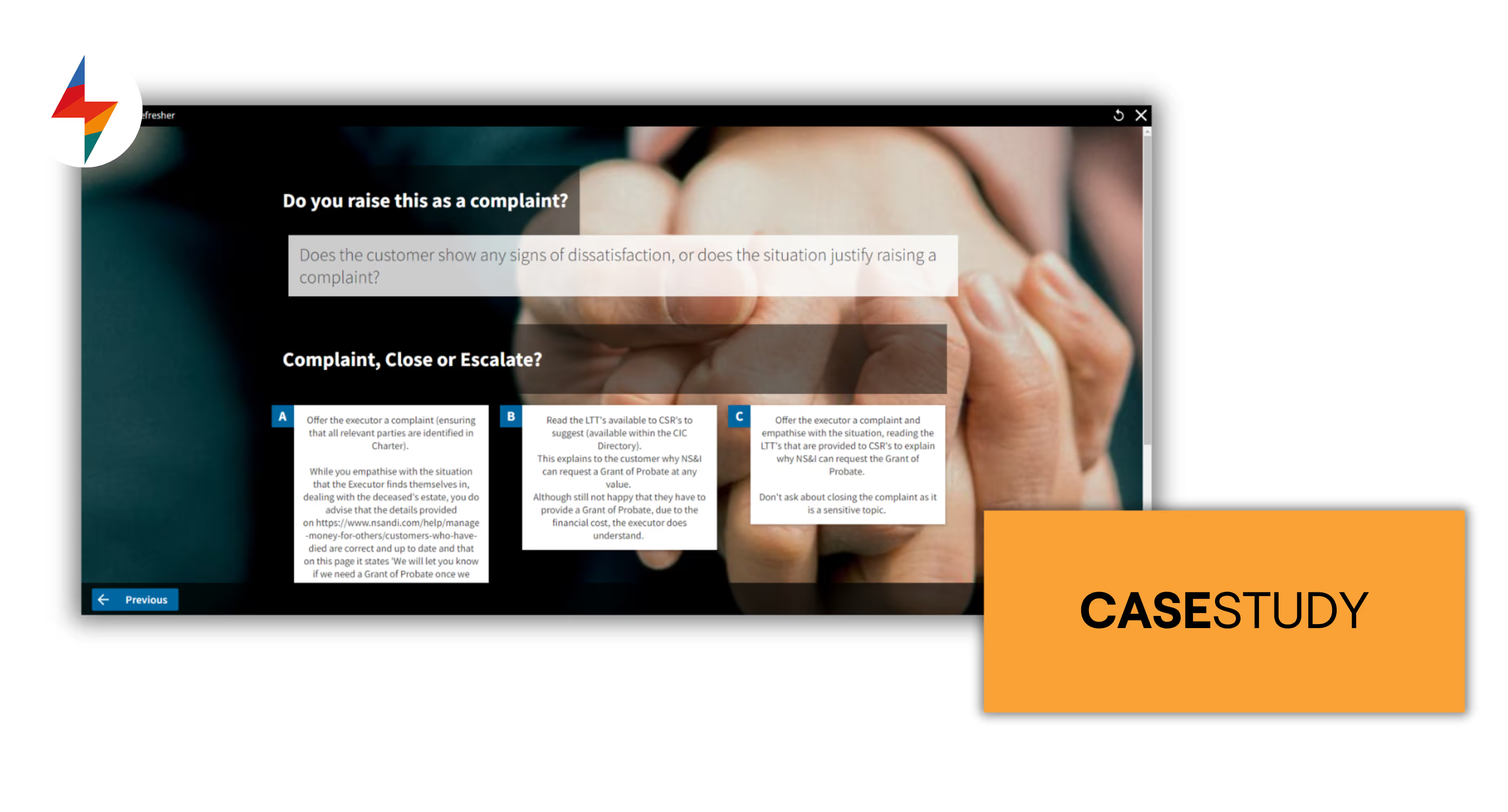
One of our customers in the medical sector needed to train healthcare professionals on sometimes controversial topics, such as medication use, fall prevention, and dementia. These are complex themes, where situations don’t always have one clear answer and where opinions can differ depending on experience or context.
To support reflection and discussion, we built detailed patient file modules where professionals work through scenario-based questions, assess the situation, and make a decision (CASESTUDY). Some questions were set up as polls, so learners could compare their choices with those of their peers.
This approach is one of the most thoughtful examples of e-learning I’ve encountered, encouraging both critical thinking and awareness of alternative perspectives, which are essential skills in a healthcare context. By blending scenario-based learning with peer insights, the training helped professionals learn from both the case and each other.
My experience with FLOWSPARKS and why you should try it
What I really like about FLOWSPARKS is the flexibility. There are so many templates to choose from, each built around a specific type of e-learning and linked to clear learning goals. As a coach, I work with customers across sectors, each with their own topics and target groups. No matter the situation, there’s always a template that fits. That makes it easy to translate a learning goal into the right format and to create e-learning that’s not just beautiful, but also effective.
Frequently Asked Questions
⚡What is an example of elearning?
e-Learning examples include microlearning, scenario-based learning, video-based learning, game-based learning, social learning, and self-reflection. Each fits a different goal: microlearning takes just three to five minutes and suits knowledge transfer, while scenario-based learning is ideal for practicing behaviour and real-life challenges.
⚡What makes elearning effective?
Effective e-learning aligns with the learning goals and the target audience: there is no one-size-fits-all approach, so every module should be tailored to its specific context. Interactivity matters just as much. People learn better when they are actively involved, so questions, scenarios, and feedback help encourage engagement and deeper learning.
⚡What is elearning and what makes it important?
e-Learning, or online learning, is self-paced training delivered via the internet. It lets learners complete courses anytime, anywhere, and independently, without a trainer or physical classroom. It's especially valuable for reaching large groups across locations and time zones, supporting just-in-time learning, sending a consistent message, and reducing training costs.
⚡What are the most common types of e-Learning?
The most common types are microlearning, scenario-based learning, video-based learning, game-based learning, social learning, and self-reflection. Video-based learning is effective for explaining procedures or storytelling, game-based learning uses elements like leaderboards and points to motivate learners, and social learning happens through interaction.
.avif)
Wil je de digitale trainingen binnen je organisatie uitbreiden?
Plan een demo en ontdek hoe FLOWSPARKS je helpt om boeiende e-learning ervaringen te creëren en te leveren, ondersteund door sterke instructional design-principes, in meerdere talen en zonder gedoe.
Meer interessante artikelen
.avif)
Best learning management systems in 2026: a practical guide to choosing the right one
Top 10 e-Learning authoring tools in 2026 (ranked for real behavior change)