Adaptief e-Learning platform: voordelen, voorbeelden en tools
.png)
e-Learning developer bij FLOWSPARKS
Een e learning platform met adaptieve technologie transformeert online leren door content, tempo en toetsen af te stemmen op de noden van elke lerende. Deze uitgebreide gids legt uit hoe adaptieve systemen werken, waarom ze de betrokkenheid en prestaties verhogen, en hoe organisaties ze in de praktijk kunnen inzetten. Ook ontdek je concrete voorbeelden, best practices en een overzicht van de 15 beste e learning platformen die het L&D-landschap vandaag vormgeven.
Je hebt geen standaard e learning module nodig die voor iedereen hetzelfde is, maar een leersysteem dat zich volledig aanpast aan de unieke leerstijl, het tempo en de behoeften van elke medewerker. Dat is adaptieve leertechnologie, en gelukkig bestaat de technologie om dit mogelijk te maken al. In deze blog verkennen we het onderwerp grondig.
In deze blog ontdek je:
- Wat adaptief leren en adaptieve leertechnologie eigenlijk zijn
- De verschillende vormen van adaptiviteit (content, volgorde, toetsing)
- Hoe adaptief leren in de praktijk werkt
- De wetenschappelijk onderbouwde voordelen
- Hoe FLOWSPARKS adaptief e-leren mogelijk maakt
- Best practices
- Een blik op de huidige marktsituatie, FAQ’s en implementatietips
Klaar om te ontdekken hoe adaptief leren jouw L&D-strategie kan versterken?
1. Wat is adaptief leren?
Adaptief leren is een aanpak binnen e-leren waarbij de leerervaring dynamisch wordt aangepast aan de individuele leerbehoeften van de gebruiker. Het werkt door real-time data te verzamelen en analyseren, zoals voortgang, begrip, fouten en zelfs gedragspatronen.
In plaats van dezelfde content in dezelfde volgorde aan iedereen aan te bieden, maakt adaptief leren het mogelijk om alleen de informatie te tonen die op dat moment relevant is voor een specifieke medewerker. Voor L&D-managers betekent dit minder manueel werk, een beter zicht op leerresultaten en effectievere trainingen. Voor de lerende biedt het een leerervaring die relevanter, uitdagender en motiverender is.
2. Wat is een adaptief e learning platform?
Een adaptief e learning platform is de slimme software achter het concept van adaptief leren. Het is vaak geïntegreerd in een leerplatform, zoals FLOWSPARKS. Het systeem past de leerervaring automatisch aan op basis van hoe iemand leert en presteert. Met andere woorden: de software ‘leest’ wat de lerende nodig heeft. Vervolgens biedt het de content, oefeningen of toetsen aan die op dat moment het meest relevant zijn.
We onderscheiden drie hoofdvormen van adaptiviteit:
Adaptieve content
De content past zich aan op basis van de kennis of rol van de lerende. Beginners ontvangen basisinformatie, terwijl experts meteen diepgaandere informatie krijgen.
Adaptieve volgorde
De volgorde van de leerobjecten wijzigt. Iemand die een vaardigheid al beheerst, kan meteen door naar de volgende module. Anderen ontvangen eerst een herhaling.
Adaptieve toetsing
Toetsen en quizzen passen zich aan aan het niveau van de lerende. Wie hoog scoort, krijgt moeilijkere vragen. Wie vastloopt, ontvangt extra uitleg en oefeningen.
Een adaptief e learning platform maakt gebruik van algoritmen, leerpaden en conditionele logica om deze keuzes te maken. Het helpt de L&D-manager ervoor te zorgen dat de lerende meer uit het leerproces haalt. Voor een meer technische blik op hoe deze systemen zijn opgebouwd, verwijzen we naar het overzichtswerk van Kabudi et al. in Computers & Education: Artificial Intelligence.
3. Hoe werkt een adaptief e learning platform?
Data-gedreven inzichten
Een adaptief e learning platform fungeert als een persoonlijke coach voor elke lerende. Het systeem bewaakt het leerproces continu en observeert hoe snel iemand nieuwe kennis opneemt. Het identificeert ook waar een lerende moeite mee heeft. Op basis van deze inzichten past het de leerervaring dynamisch aan. Elke lerende krijgt zo precies wat hij of zij nodig heeft om vooruitgang te boeken.
Vanaf het moment dat een lerende een training start, verzamelt het systeem informatie over zijn of haar voorkennis, eerdere prestaties en gedrag binnen het platform. Dit stelt het systeem in staat om onmiddellijk een gepersonaliseerd startpunt te bepalen. Voor de L&D-manager betekent dit dat het individueel inschatten van leerbehoeften niet langer manueel hoeft. Voor de lerende betekent het dat hij of zij op het juiste niveau begint en geen tijd verspilt aan content die al gekend is. Een recente scoping review in PLOS ONE bevestigt dit door vergelijkbare voordelen aan te tonen wanneer AI-gestuurd adaptief leren werd ingezet in gezondheidszorgopleidingen.
Dynamische paden, adaptieve toetsing en continue optimalisatie
Op basis van deze analyse maakt het systeem een uniek leerpad aan. Modules, oefeningen en toetsen worden afgestemd op de specifieke behoeften van de lerende. Dit betekent dat een enkele training automatisch duizenden lerenden kan bedienen. Elke lerende volgt zijn eigen traject zonder extra werk. Dit maakt het leerproces persoonlijk en relevant, wat de motivatie en resultaten verhoogt.
Tijdens het leerproces past het systeem continu de content en volgorde van de modules aan. Snellere lerenden krijgen meteen uitdagendere content aangeboden, terwijl wie vastloopt extra uitleg en oefening ontvangt. Tegelijkertijd hoeven L&D-managers niet langer manueel te differentiëren.
Toetsen en quizzen worden ook aangepast aan de lerende. Wie goed presteert, krijgt moeilijkere vragen, terwijl wie extra ondersteuning nodig heeft gerichte uitleg en oefeningen ontvangt. Dit geeft L&D-managers real-time inzicht in de sterktes en zwaktes van elke lerende.
Tot slot biedt een adaptief e learning platform L&D-managers uitgebreide rapporten die exact tonen waar lerenden vooruitgaan en waar ze ondersteuning nodig hebben. Dankzij deze data-gedreven aanpak kunnen L&D-managers strategische keuzes maken rond coaching, bijscholing en verdere opleiding.
4. Wat zijn de voordelen van een adaptief e learning platform?
Adaptief leren versterkt de rol van de L&D-manager en trainer
Adaptief leren geeft jou als L&D-manager of trainer meer inzicht, meer impact, en vooral meer tijd. De technologie neemt repetitieve taken over en ondersteunt je bij het aanbieden van de juiste content aan de juiste persoon op het juiste moment.
Dat betekent niet dat je minder belangrijk wordt, integendeel. Het geeft je de ruimte om je te focussen op wat echt telt: het ontwikkelen van sterke leerprogramma’s, het coachen van medewerkers en het optimaliseren van de leerervaring op basis van data.
Meer leerkansen voor iedereen
Adaptief leren democratiseert leren. Waar vroeger de snelste lerenden verveeld raakten en de tragere achteropraakten, krijgt nu iedereen wat nodig is om succesvol te zijn. Omdat het e learning platform zich aanpast aan ervaring, tempo, voorkeur en gedrag, maakt het minder uit hoeveel voorkennis iemand heeft.
Een adaptief e learning platform verhoogt de betrokkenheid
Wanneer het niveau aansluit bij de behoeften van de lerende, verandert frustratie in nieuwsgierigheid en motivatie. Als gevolg ervaren lerenden meer eigenaarschap over hun leerproces.
Real-time data en feedback
Terwijl iemand aan het leren is, analyseren deze systemen continu zijn of haar tempo, keuzes en foutpatronen. Dit genereert waardevolle data over leerprestaties en -gedrag. Voor L&D-professionals biedt dit inzichten om content gericht bij te sturen en knelpunten sneller te identificeren.
In deze meta-analyse gepubliceerd in BMJ Open tonen Fontaine et al. aan dat adaptieve e learning omgevingen dit soort data gebruiken om kennis en vaardigheden van zorgprofessionals en studenten significant te verbeteren.
5. Voorbeelden van adaptief leren in een e learning platform
Adaptief leren hoeft niet ingewikkeld te zijn of aan AI gekoppeld te zijn. Met FLOWSPARKS kun je vandaag al eenvoudig adaptieve principes toepassen in je e-learning.
FASTLANE
Dit programma biedt lerenden een online leerpad dat rekening houdt met hun individuele kennisniveau. Lerenden doen een intaketoets waarmee ze vrijstellingen kunnen verdienen voor onderdelen van het programma.

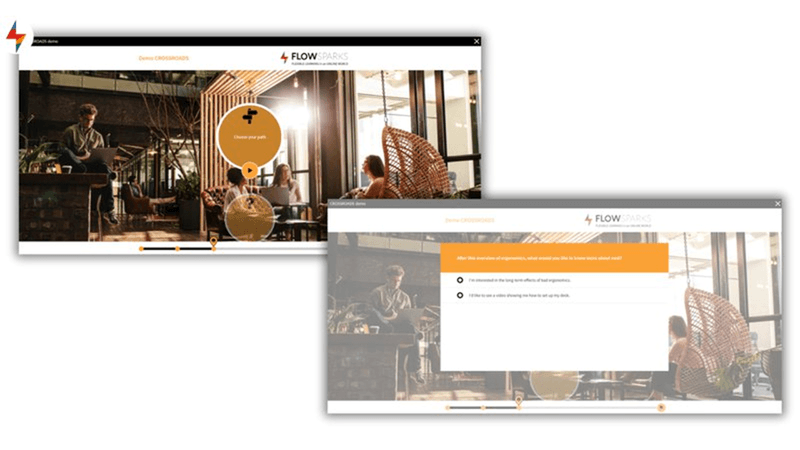
CROSSROADS
In dit programma beïnvloeden deelnemers de volgorde van hun leerpad door vragen te beantwoorden. Zo kunnen L&D-professionals verschillende leerpaden en uitkomsten creëren.
FLASHCARDS
Met deze activiteit kunnen lerenden hun kennis inoefenen via meerkeuzevragen. Via de Leitner-strategie in de instellingen zorg je ervoor dat fout beantwoorde vragen blijven terugkeren totdat ze correct worden beantwoord.

SMARTGAME
In een SMARTGAME bouw je scenario’s waarin deelnemers hun eigen leerpad uitstippelen. Elke beslissing leidt tot een andere uitkomst, waardoor ze de gevolgen van hun keuzes onmiddellijk ervaren. De feedback is afgestemd op het gekozen pad, ideaal voor situaties waarbij gedrag, empathie of veiligheid centraal staan.

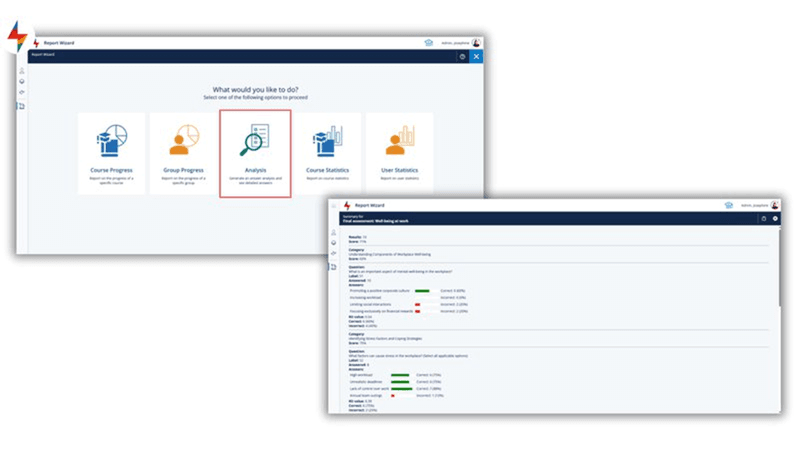
Rapportage met FLOWSPARKS
De rapporten in FLOWSPARKS tonen exact waar lerenden vastlopen, welke vragen struikelblokken vormen en welke onderdelen vlot worden doorlopen. Met deze inzichten kun je je content gericht verfijnen.
6. 15 e learning platformen met adaptief leren
Wanneer we het hebben over adaptieve e learning platformen, spreken we eigenlijk over verschillende soorten tools die samenwerken. Sommige zijn authoring tools, waarmee je zelf e learning modules ontwerpt en bouwt, inclusief de adaptieve logica in de content. Andere zijn learning management systems (LMS’s) die zich voornamelijk richten op inschrijving, levering, opvolging en rapportage. Dan zijn er ook learning experience platforms (LXP’s), die meer focussen op het samenbrengen van content uit meerdere bronnen en het aanbevelen van relevante leermiddelen aan lerenden.
In de onderstaande lijst vind je 15 opmerkelijke e learning platformen met adaptieve leertechnologie, verspreid over deze categorieën. Elk platform benadert adaptiviteit op zijn eigen manier, dus de ‘beste’ keuze hangt af van de context en leerdoelen van jouw organisatie.
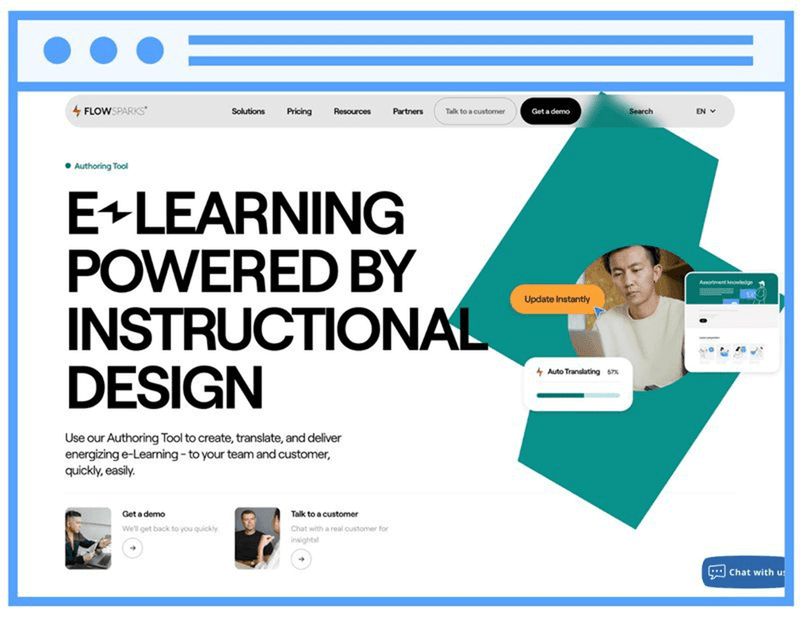
FLOWSPARKS — #1 adaptief e learning platform
FLOWSPARKS is ontworpen voor organisaties die interactieve, adaptieve e-learning op schaal willen creëren, zonder geavanceerde ontwerp- of technische vaardigheden nodig te hebben. Elk format is gebaseerd op leerwetenschap, zodat makers zich kunnen focussen op betekenisvolle betrokkenheid in plaats van louter presentatie.
Adaptief leren is ingebouwd in deze formats. Met FASTLANE beginnen lerenden met een intaketoets om voorkennis te beoordelen; wie hoog scoort, verdient vrijstellingen en finisht sneller. Content en volgorde passen zich aan op basis van de toetsresultaten.
Waar veel andere e learning platformen in deze lijst voornamelijk personaliseren welke cursus of resource iemand als volgende ziet, gaat FLOWSPARKS een stap verder door de content, het traject en de toetslogica ínnen een module adaptief te maken via zijn didactische templates.
2. Docebo
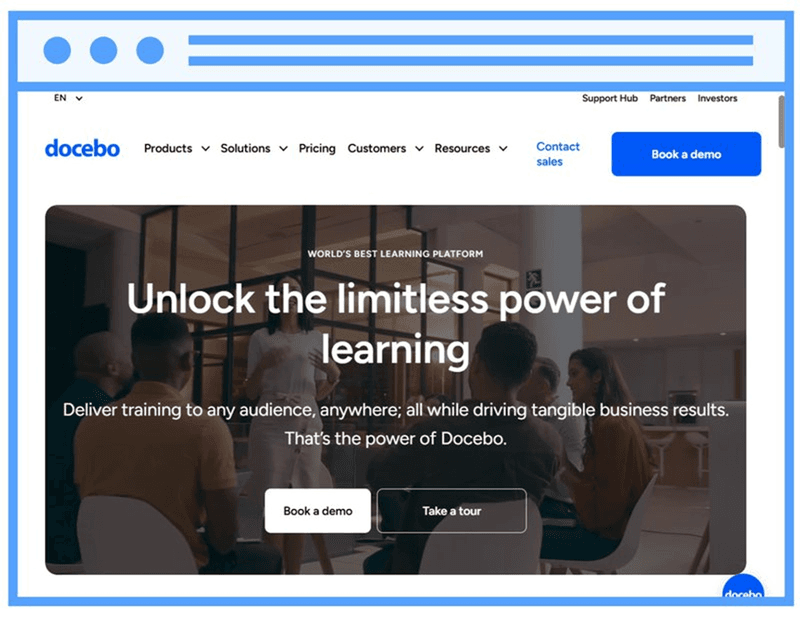
Docebo is een AI-gestuurd e learning platform voor middelgrote en grote ondernemingen, dat zij gebruiken om medewerkers, klanten en partners vanuit één omgeving op te leiden. De learningsuite combineert LMS-functionaliteiten met AI die leerdersdata analyseert. Het systeem past vervolgens leerpaden en -ervaringen aan op individueel gedrag, vaardigheidsniveau en doelen. Dit maakt gepersonaliseerde programma’s op schaal mogelijk.
Op softwarebeoordelingssites waarderen klanten doorgaans de rijke functionaliteit, maar ze merken ook op dat Docebo aan de hogere kant van de prijsschaal zit en bij geavanceerde scenario’s, zoals complexe structuren of terugkerende certificeringen, rigide of omslachtig kan aanvoelen om te configureren.
3. Absorb LMS
Absorb LMS is een cloudgebaseerd learning management system dat organisaties gebruiken om trainingen te leveren aan medewerkers, klanten en partners. Het bevat AI-gestuurde mogelijkheden zoals Intelligent Recommendations en tools voor het opbouwen van gepersonaliseerde leerpaden, die lerenden helpen relevante cursussen te vinden en, indien geconfigureerd, meer gerichte, adaptieve trajecten door de content te volgen.
Gebruikers benadrukken doorgaans de moderne interface en het brede functiepakket, maar vermelden ook dat beheerinstellingen overweldigend kunnen aanvoelen, dat ze meer flexibiliteit en snellere prestaties wensen in bepaalde gebieden, en dat workflows zoals inschrijving of sessieselectie verwarrend kunnen zijn of te veel stappen omvatten.

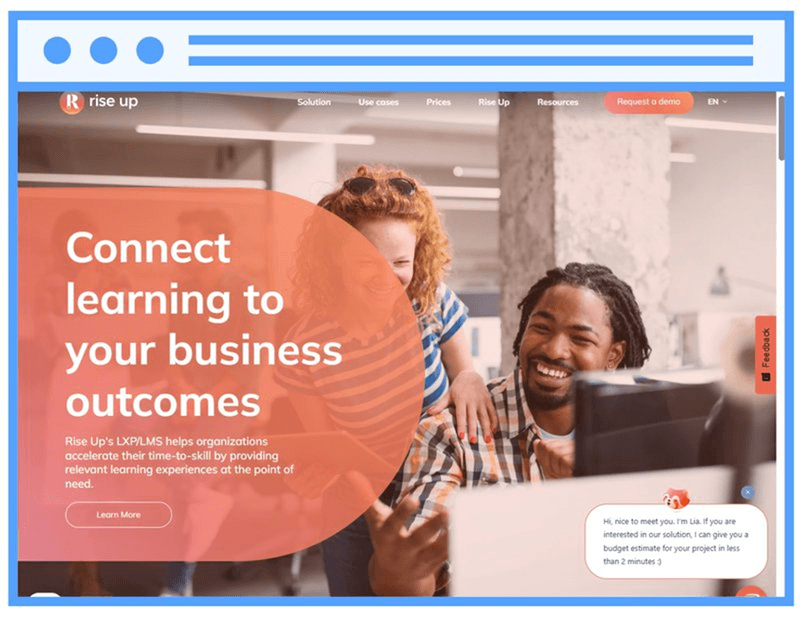
4. Rise Up
Rise Up is een alles-in-één e learning platform dat LMS, LXP en ingebouwde authoring combineert in één AI-gestuurde omgeving. De adaptieve leertechnologie detecteert kennishiaten, personaliseert leerpaden voor verschillende doelgroepen en gebruikt AI (inclusief automatische vertaling en geheugenfeatures) om kennis te versterken en de tijd-tot-bekwaamheid te verkorten.
Gebruikers waarderen doorgaans het gebruiksgemak en de integraties, maar vermelden ook beperkingen in visuele aanpassing, occasionele bugs bij intensiever gebruik en een functieset die, hoewel robuust, minder flexibel kan aanvoelen dan sommige alternatieven wanneer je zeer specifieke branding of geavanceerde configuratie wenst.
5. Didask
Didask is een LMS dat AI combineert met cognitieve wetenschap om organisaties te helpen online trainingen en adaptieve leerpaden sneller te creëren. Zijn ‘Instructional AI’ kan bestaande content omzetten in gestructureerde e learning modules, terwijl de adaptieve engine cursussen personaliseert door activiteiten en modaliteiten aan te passen aan elke lerende, met als doel de betrokkenheid en vaardigheidsontwikkeling te verbeteren.
Gebruikers waarderen hoe Didask niet-experten begeleidt bij het cursusontwerp en de contentcreatie versnelt, maar sommigen merken op dat het niet alle activiteiten- of vraagtypes biedt die ze van een traditioneel, functierijk LMS verwachten, waardoor ze soms een tweede authoring tool nodig hebben om die hiaten op te vullen.

6. Realizeit
Realizeit is een adaptief leer- en trainingsplatform dat AI gebruikt om leerervaringen continu te personaliseren. Het verbindt content, toetsingen en leerdersprestaties zodat lerenden kunnen overslaan wat ze al beheersen en zich kunnen focussen op echte kennishiaten.
Het wordt vaak gekozen voor hoogwaardige of compliance-zware trainingen waar geverifiëerde competentie cruciaal is, maar omdat het werkt met gedetailleerde vaardigheids- en contentmodellen, kan het aanvoelen als een relatief zware implementatie voor organisaties die gewoon eenvoudige e learning levering nodig hebben.

7. Area9 Lyceum
Area9 Lyceum biedt Area9 Rhapsode, een cloudgebaseerd adaptief e learning platform met ingebouwde authoring, levering en rapportage. Het gebruikt AI-gestuurde, vierdimensionale adaptiviteit, waarbij rekening wordt gehouden met kennis, vaardigheden, vertrouwen en andere factoren, om content, trainingssequenties en versterking in real time aan te passen zodat elke lerende een op maat gemaakt traject volgt.
Omdat Rhapsode steunt op gedetailleerde cognitieve modellen en diagnostiek, past het het best bij organisaties die bereid zijn tijd te investeren in gestructureerd contentontwerp. Teams die op zoek zijn naar een lichter, template-gebaseerd tool voor snelle uitrol kunnen het ervaren als een relatief zware oplossing vergeleken met eenvoudigere authoring-first platformen.

8. Knewton Alta (van Wiley)
Knewton Alta (van Wiley) is een adaptief courseware platform dat voornamelijk in het hoger onderwijs wordt gebruikt. Het combineert vrij beschikbare content met een adaptieve engine die oefening, instructie en toetsing in één omgeving levert. Het diagnosticeert continu de kennis van elke lerende, vult hiaten in met just-in-time uitleg en past de volgorde en moeilijkheidsgraad van opdrachten aan om echte beheersing van elk leerdoel te ondersteunen.
Omdat Alta is ontworpen rond gestructureerde curricula en academische vakken, is het een sterke keuze voor wiskunde, wetenschappen en andere gestandaardiseerde cursussen, maar minder geschikt voor organisaties die volledig aangepaste bedrijfscontent nodig hebben, uitgebreide brandingopties of brede e learning authoring buiten de vooraf gedefinieerde cursusstructuren.

9. Axonify
Axonify is een e learning platform gericht op frontline medewerkers dat AI-gebaseerd adaptief leren, dagelijks microlearning en taakbeheer combineert voor medewerkers in retail, logistiek en andere operationele functies. Het adaptieve algoritme volgt de voortgang van elke medewerker over tijd en levert korte, gepersonaliseerde trainingssessies, doorgaans 3 tot 5 minuten per dag, om kennis te versterken, hiaten te dichten en kritieke informatie top-of-mind te houden in de dagelijkse werkstroom.
De sterke focus op korte frontlinetraining maakt Axonify effectief voor versterking, maar betekent ook dat langere, complexere cursussen en rijkere sociale leerfeatures minder vanzelfsprekend zijn. Gebruikers signaleren soms ook beperkingen rond integraties, beloningsopties en flexibiliteit voor bredere leerbehoeften.

10. OttoLearn
OttoLearn is een adaptief microlearning e learning platform dat korte, gamified training ‘bursts’ levert die de betrokkenheid en langetermijnkennisretentie verhogen. De engine combineert microlearning, adaptief leren en gespreide herhaling om de dagelijkse oefening van elke lerende te personaliseren, met de focus op het dichten van specifieke kennishiaten in plaats van het doorlopen van volledige cursussen.
De nauwe focus op korte leermomenten maakt OttoLearn effectief voor continue versterking bij gedistribueerde teams, maar betekent ook dat het minder geschikt is wanneer je rijkere, langere e learning ervaringen, uitgebreide integraties of gedetailleerde visuele aanpassing nodig hebt, vergeleken met bredere authoring-gedreven platformen.

11. Sana Learn (Sana Labs)
Sana Learn is een AI-native e learning platform dat LMS, LXP, authoring en een virtueel klaslokaal samenbrengt in één systeem. Het gebruikt adaptief leren en intelligente agents om cursussen, tutoring en aanbevelingen te personaliseren op basis van de voortgang, rol en vaardigheden van elke lerende.
Die sterke AI-focus maakt Sana Learn aantrekkelijk voor kennisintensieve, snel veranderende omgevingen, maar gaat ook gepaard met enterprise-gerichte prijzen en, volgens vergelijkingen en gebruikersfeedback, beperkingen rond visuele aanpassing en dataconnectiviteit die als beperkingen kunnen worden ervaren als je zeer specifieke branding of diepgaande, op maat gemaakte integraties wenst.

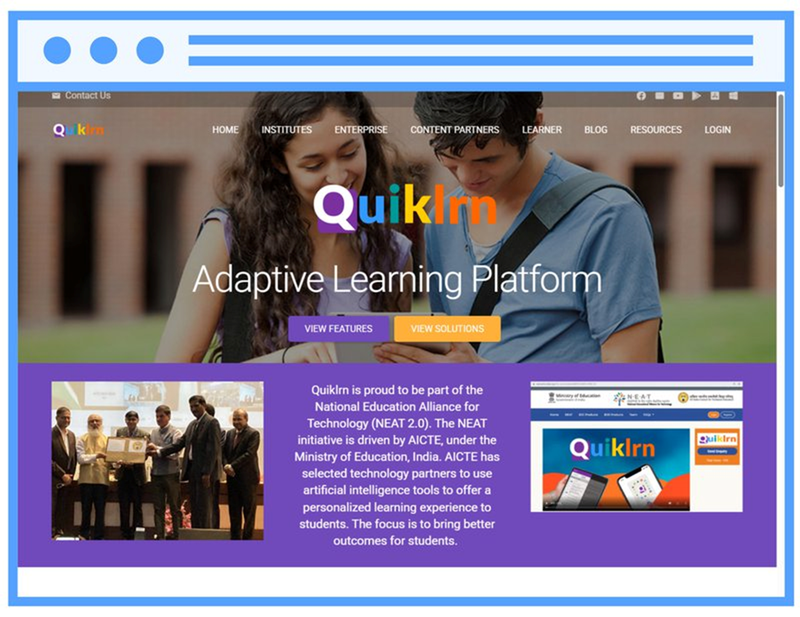
12. Quiklrn
Quiklrn is een cloudgebaseerd adaptief e learning platform dat door academische instellingen en ondernemingen wordt gebruikt. Het combineert cursus- en contentbeheer met AI-gestuurde tools om op uitkomsten gebaseerde, gepersonaliseerde leerpaden en digitale examens te bouwen voor grote aantallen lerenden.
De focus op accreditatieworkflows, examenbeheer en in de uitgever geïntegreerde e-books maakt het een praktische keuze voor formele onderwijsomgevingen, maar de mobiele app ontvangt met name gemengde feedback over bruikbaarheid en stabiliteit, en de algehele ervaring kan meer aanvoelen als een gestructureerd academisch systeem dan als een flexibele, design-gedreven e learning omgeving.
13. Duolingo
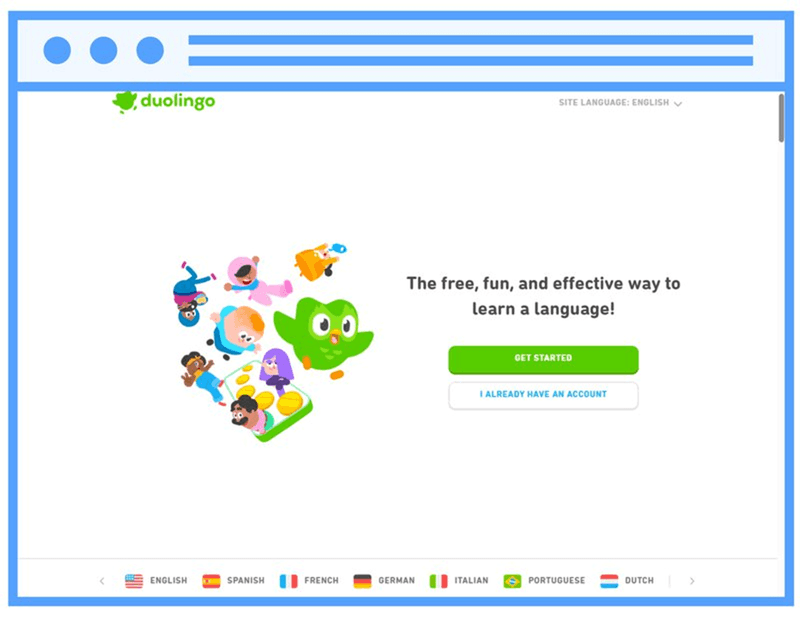
Duolingo is een gamified taalleer-app die AI en adaptieve algoritmen gebruikt om lessen in real time te personaliseren. Terwijl lerenden korte oefeningen doorlopen, volgt het systeem hun prestaties en past de moeilijkheidsgraad en volgorde van latere oefeningen aan, zodat de uitdaging in de ‘just right’-zone blijft. Aanvullende gepersonaliseerde oefening is beschikbaar via features zoals de Practice Hub.
Het wordt algemeen beschouwd als een toegankelijke manier om dagelijkse taalgewoontes en basisvocabulaire op te bouwen, vooral voor beginners, maar reviews en onafhankelijke schrijfsels merken vaak op dat oefeningen repetitief kunnen worden, spreekvaardigheid en echte communicatie beperkt blijven, en de cursuskwaliteit merkbaar verschilt tussen talen. Veel lerenden behandelen het uiteindelijk als aanvulling in plaats van een volledige oplossing.
14. Prodigy Math
Prodigy Math is een spelgebaseerd, adaptief wiskundeplatform voor leerlingen in het basis- en middelbaar onderwijs dat de moeilijkheidsgraad van vragen aanpast op basis van de prestaties van elke lerende. Terwijl kinderen door de fantasiewereld van het spel spelen, richt het systeem zich continu op curriculum-gealigneerde vaardigheden op het juiste uitdagingsniveau, waarbij in-game vragen worden gebruikt om sterktes en hiaten te diagnosticeren terwijl leerkrachten dashboards krijgen met voortgang en curriculumdekking.
Het wordt vaak als sterk motiverend ervaren voor jongere lerenden dankzij de spelmechanismen, maar veel ouders en leerkrachten merken ook op dat de gratis versie beperkt aanvoelt, spelbeloningen soms de focus op de eigenlijke wiskundevragen overschaduwen, en dat oudere of meer gevorderde leerlingen de stijl en diepgang van de oefeningen relatief snel ontgroeien.

15. Embibe
Embibe is een AI-gestuurd adaptief e learning platform dat adaptieve leertechnologie inzet ter ondersteuning van school- en toelatingsexamenvoorbereiding, voornamelijk voor Indiase curricula. De ‘adaptive practice’-engine past deep knowledge-tracing algoritmen toe om oefenpaden te personaliseren, vragen op te splitsen in tientallen getagde elementen en items aan te bieden op basis van het beheersingsniveau van elke student, met 3D-video’s, simulaties en een AI-mentor bovenop de oefenervaring.
Dat examengerichte, datazware ontwerp maakt Embibe bijzonder sterk voor intensieve examenvoorbereiding, maar betekent ook dat het minder een algemeen e learning platform is. Reviews en discussies geven aan dat hoewel veel content gratis is, sleutelfunctionaliteiten achter betaalde plannen zitten, en gebruikers soms problemen ondervinden zoals fouten in vragen of vertragingen bij testresultaten.

7. Hoe kies je het juiste e learning platform met adaptief leren?
Wanneer je adaptief leren wilt implementeren, is het kiezen van het juiste e learning platform cruciaal. Niet elk tool biedt dezelfde flexibiliteit, automatisering of gebruiksgemak.
1. Niveau van adaptiviteit
Bepaal hoeveel adaptiviteit je echt nodig hebt. Heb je volledig gepersonaliseerde leerpaden nodig op basis van intaketoetsen? Zoek dan naar software die intelligente beslisbomen en automatische contentselectie ondersteunt. Wil je liever scenario’s of vertakkingen? Dan is het belangrijk dat het e learning platform een intuïtieve interface biedt die je in staat stelt vertakkingen te creëren zonder technische kennis.
2. Gebruiksgemak
Vervolgens speelt gebruiksgemak een grote rol. Tools die te complex zijn, vertragen de productie. Een platform dat gemakkelijk te leren en te gebruiken is, versnelt de feedbacklus en verhoogt de kwaliteit van je eindproduct.
3. Compatibiliteit en schaalbaarheid
Compatibiliteit en schaalbaarheid zijn ook belangrijk. Je e learning platform moet naadloos werken met je LMS, duidelijke rapporten leveren en mee kunnen groeien met je leerprogramma’s. Denk aan SCORM, xAPI, ondersteuning voor meerdere apparaten en de mogelijkheid om modules te herorganiseren zonder alles te herbouwen.
4. Rapportagemogelijkheden
Je wilt ook dat je e learning platform inzicht geeft in leerdata. Een platform dat duidelijk toont waar lerenden afhaken en welke componenten de meeste impact hebben, helpt je adaptiviteit verder te verfijnen. Data is de brandstof die gerichte verbeteringen mogelijk maakt.
Tools zoals FLOWSPARKS combineren deze elementen in de praktijk. Je kunt intakegestuurde leerpaden opbouwen met FASTLANE, scenario’s ontwikkelen via SMARTGAME, microlearnings flexibel organiseren en rapporten gebruiken om je programma’s stap voor stap te optimaliseren. Maar het belangrijkste blijft: kies een e learning platform dat jouw visie op leren ondersteunt en het eenvoudig maakt om adaptieve principes tot leven te brengen.
8. Best practices voor succesvol adaptief leren
Adaptief leren biedt enorme mogelijkheden, maar succes is niet vanzelfsprekend. Het gaat niet alleen om technologie, maar ook om hoe je die inzet. Hier zijn enkele best practices die het verschil maken:
1. Begin met duidelijke leerdoelen
Zonder duidelijk gedefinieerde doelen is het onmogelijk om adaptiviteit effectief in te zetten. Bepaal vooraf welke gedragingen of vaardigheden je wilt beïnvloeden, zodat elke interactieve oefening en elk scenario hierop gefocust is.
2. Gebruik korte, gerichte microlearnings
Adaptieve systemen werken het best wanneer content bite-sized en flexibel is. Korte modules stimuleren autonomie en motivatie.
3. Integreer interactieve oefeningen
Adaptiviteit werkt alleen als lerenden actief oefenen met de content. Scenario’s en simulaties maken abstracte kennis concreet. Activiteiten zoals de SMARTGAME in FLOWSPARKS zijn hiervoor ideaal: deelnemers zien meteen de gevolgen van hun keuzes.
4. Monitor data en maak bijsturingen
Gebruik de rapportage- en analysemogelijkheden van je e learning platform om te zien waar deelnemers vastlopen en welke componenten het meest effectief zijn. Data is de brandstof voor continue verbetering.
5. Zorg voor een cyclisch proces van testen en verbeteren
Adaptief leren is niet een eenmalige activiteit. Test nieuwe modules, verzamel feedback van lerenden, pas content aan en herhaal dit proces. Zo blijft je training actueel en effectief.
6. Betrek KMO’s en eindgebruikers vroeg in het proces
Door experts en werkelijke gebruikers van bij het begin te betrekken, ben je zeker dat content relevant en realistisch is. Dit verhoogt niet alleen de kwaliteit, maar ook de motivatie van deelnemers.
Door bovenstaande praktijken te volgen, maak je van adaptief leren een structureel krachtig instrument dat gedrag verandert en motivatie stimuleert. Tools zoals FLOWSPARKS maken dit ook haalbaar voor teams zonder complexe programmeerkennis, zodat je snel interactieve, gepersonaliseerde leerervaringen kunt aanbieden.
9. De stand van zaken in edtech en e learning platformen
De interesse in adaptief leren is de afgelopen jaren gestaag gegroeid. Waar het vroeger voornamelijk werd getest in academische contexten, zien we vandaag dat organisaties, van grote bedrijven tot non-profits, actief op zoek zijn naar manieren om trainingen persoonlijker en relevanter te maken. De stijgende verwachtingen van lerenden spelen hierin een grote rol.
In de wereldwijde edtech-markt is adaptief leren geëvolueerd van een ‘nice-to-have’ naar een concurrentievoordeel. Steeds meer e learning platformen integreren elementen zoals real-time feedback, data-gedreven aanbevelingen en dynamische leerpaden.
Deze combinatie van groeiende vraag, technologische vooruitgang en hogere verwachtingen zorgt ervoor dat adaptief leren een vaste waarde wordt in moderne L&D-strategieën. En dat is geen hype, maar een logische evolutie.
Naast adaptief leren worden toekomstige L&D-strategieën steeds meer bepaald door bredere e-learningtrends zoals AI, op vaardigheden gebaseerd leren en data-gedreven ontwerp. Die verkennen we in volgend artikel: Stay ahead of the curve: 10 Game-changing L&D trends in 2025.
10. FAQ
⚡ Wat is adaptieve leertechnologie?
Adaptieve leertechnologie past automatisch de leerervaring aan op basis van het kennisniveau, het tempo en de prestaties van de lerende. De content, feedback en volgorde van modules veranderen dienovereenkomstig, zodat elke deelnemer een gepersonaliseerd en relevant leerpad ontvangt.
⚡ Wat is een voorbeeld van adaptief leren?
Een voorbeeld is een e learning module waarbij een korte intaketoets bepaalt welke modules je moet volgen en welke niet. Vertakkende scenario’s waarbij jouw keuzes leiden tot verschillende routes of feedback zijn ook vormen van adaptief leren.
⚡ Wat zijn de beste e learning platformen met adaptief leren?
Het beste e learning platform hangt af van je doelen en doelgroep. FLOWSPARKS is een sterke keuze voor organisaties die schaalbare, adaptieve e-learning voor werkplektraining willen. Andere platformen, zoals Knewton Alta of Realizeit, zijn mogelijk beter geschikt voor academische omgevingen.
.avif)
Wil je de digitale trainingen binnen je organisatie uitbreiden?
Plan een demo en ontdek hoe FLOWSPARKS je helpt om boeiende e-learning ervaringen te creëren en te leveren, ondersteund door sterke instructional design-principes, in meerdere talen en zonder gedoe.
Meer interessante artikelen
.avif)
Best learning management systems in 2026: a practical guide to choosing the right one
Top 10 e-Learning authoring tools in 2026 (ranked for real behavior change)