Adaptive learning technology explained: Benefits, examples and the 15 best platforms
.png)
e-Learning developer at FLOWSPARKS
You no longer need a one-size-fits-all e-Learning module, but rather a learning system that fully adapts to the unique learning style, pace, and needs of each employee. That is adaptive learning technology, and fortunately, the technology to make this possible already exists. In this blog, we’ll explore it in depth.
In this blog, you’ll discover:
- What adaptive learning and adaptive learning technology actually are
- The different forms of adaptivity (content, sequence, assessment)
- How adaptive learning works in practice
- The research-based benefits
- How FLOWSPARKS enables adaptive e-Learning
- Best practices
- And a look at the current market situation, FAQs, and implementation tips
Ready to discover how adaptive learning can strengthen your L&D strategy?
1. What is adaptive learning?
Adaptive learning is an approach within e-Learning in which the learning experience dynamically adapts to the individual learning needs of the user. It works by collecting and analyzing real-time data such as progress, understanding, errors, and even behavior patterns.
Instead of offering the same content in the same order to everyone, adaptive learning makes it possible to show only the information that is relevant to a particular employee at that moment. For L&D managers, this means less manual work, better visibility of learning outcomes, and more effective training. For the learner, it provides a learning experience that is more relevant, challenging, and motivating.
2. What is adaptive learning technology?
Adaptive learning technology is the smart software or technology behind the concept of adaptive learning. It is often incorporated into a learning platform, such as FLOWSPARKS. The system automatically adapts the learning experience based on how someone learns and performs. In other words, the software ‘reads’ what the learner needs. It then provides the content, exercises, or tests that are most relevant at that moment.
We distinguish three main types of adaptivity:
Adaptive content
The content adapts based on the learner's knowledge or role. For example: beginners receive basic information, while experts receive more in-depth information right away.
Adaptive sequence
The order of the learning objects changes. For example, someone who has already mastered a skill can move on to the next module. Others first receive a review.
Adaptive assessment
Tests and quizzes adapt to the learner's level. If someone scores high, the system raises the bar. If someone gets stuck, it offers extra explanations and exercises.
Adaptive learning technology uses algorithms, learning paths, and conditional logic to make these choices. It helps the L&D manager ensure that the learner gets more out of the learning process. For a more technical view of how these systems are built, Kabudi et al. map the field in detail in Computers & Education: Artificial Intelligence.
3. How does adaptive learning technology work?
Data-driven insights
Adaptive learning technology acts as a personal coach for every learner. The system continuously monitors the learning process and observes how quickly someone picks up new knowledge. It also identifies where a learner is struggling. Based on these insights, it dynamically adapts the learning experience. Each learner then gets exactly what they need to progress.
From the moment a learner starts a training course, the system collects information about their prior knowledge, previous performance, and behavior within the platform. This enables the system to immediately determine a personalized starting point. For the L&D manager, this means that assessing individual learning needs no longer has to be done manually. For the learner, this means they start at the right level. They don't waste time on content they already master. A recent scoping review in PLOS ONE confirms this by showing similar benefits when AI-driven adaptive learning was used in health professions education.
Dynamic paths, adaptive assessments, and continuous optimisation
Based on this analysis, the system creates a unique learning path. Modules, exercises, and tests are tailored to the specific needs of the learner. This means that a single training course can automatically serve thousands of learners. Each learner follows their own route without any extra work. This makes the learning process feel personal and relevant, increasing motivation and results for the learner.
During the learning process, the system continuously adjusts the content and order of the modules. Learners who learn faster are immediately offered more challenging content, while those who get stuck receive extra explanation and practice. This makes learning efficient and stimulating for the learner, without it becoming too easy or too frustrating. At the same time, L&D managers no longer need to differentiate manually. The technology automatically guides each learner at the right level.
Tests and quizzes are also adapted to the learner. Those who perform well are given more difficult questions, while learners who need extra help receive targeted explanations and exercises. This gives L&D managers real-time insight into the strengths and weaknesses of each learner, while the learner receives relevant and meaningful feedback.
Finally, adaptive learning technology gives L&D managers comprehensive reports that show exactly where learners make progress and where they need support.
Thanks to this data-driven approach, L&D managers can make strategic choices about coaching, refresher courses, and further training. At the same time, each learner receives exactly what they need to be successful.
4. What are the benefits of adaptive learning technology?
Adaptive learning technology strengthens the role of the L&D manager and teacher
Adaptive learning gives you, as an L&D manager or trainer, more insight, more impact, and above all, more time. The technology takes over repetitive tasks and supports you in offering the right content to the right person at the right time.
That doesn't mean you become less important—on the contrary. It gives you the space to focus on what really matters: developing strong learning pathways, coaching employees, and optimizing the learning experience based on data.
More learning opportunities for everyone
Adaptive learning democratizes learning. Whereas in the past, the fastest learners became bored and the slower ones fell behind, now everyone gets what they need to be successful. Because the platform adapts to experience, pace, preference, and behavior, it matters less how much prior knowledge someone has. Learners can start as complete beginners or dive deeper when they are ready.
Adaptive learning technology increases engagement
When the level matches the learner’s needs, frustration turns into curiosity and motivation because the challenge feels just right. As a result, learners experience more ownership over their learning process.
Real-time data and feedback
While someone is learning, these systems continuously analyze their pace, choices, and error patterns. This generates valuable data about learning performance and behavior. For L&D professionals, this provides insights to adjust content in a targeted manner and identify bottlenecks more quickly. The result is training that constantly evolves and better meets the needs of each learner.
In this meta-analysis published in BMJ Open, Fontaine et al. show that adaptive e-Learning environments use this kind of data to significantly improve knowledge and skills in health professionals and students.
5. Examples of adaptive learning
Adaptive learning does not have to be complicated or linked to AI. With FLOWSPARKS, you can easily apply adaptive principles to your e-Learning today.
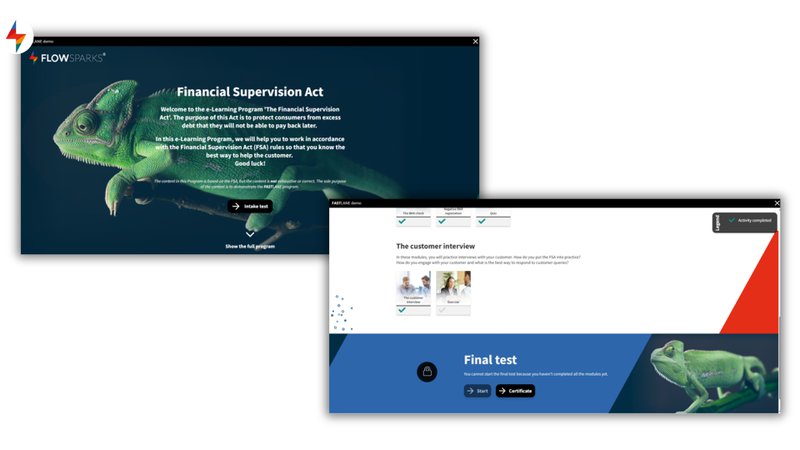
FASTLANE
This program offers learners an online learning pathway that takes their individual knowledge level into account. Learners take an intake test that allows them to earn exemptions for parts of the program.
CROSSROADS
In this program, participants influence the order of their learning path by answering questions. This means that L&D professionals can create different learning paths and outcomes in this program.

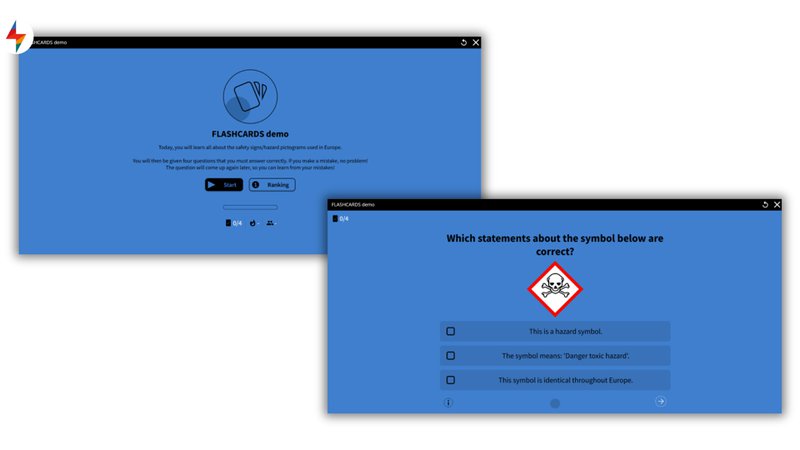
FLASHCARDS
This activity allows learners to drill their knowledge using multiple-choice questions. If you select the Leitner strategy in the settings, you can ensure that incorrectly answered questions keep coming back until they are answered correctly.
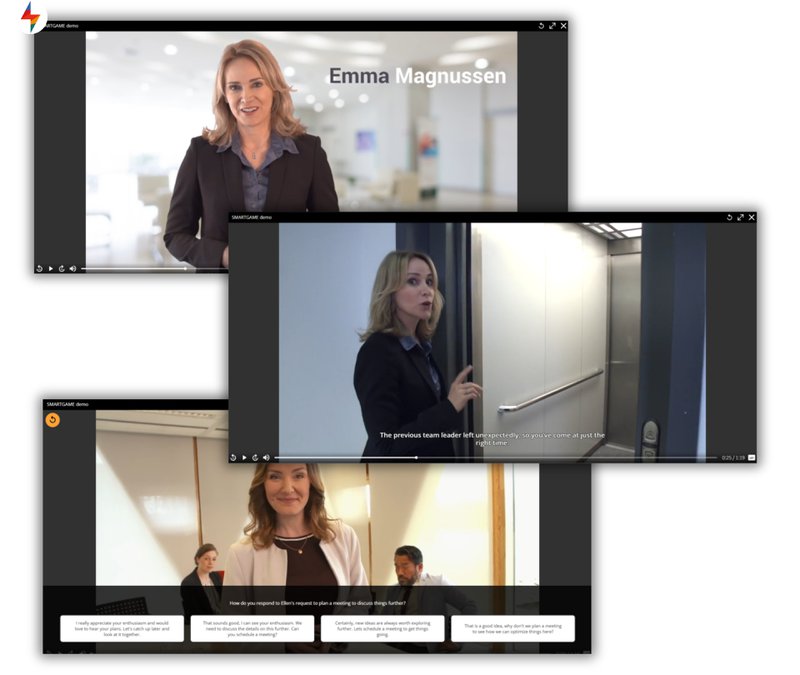
SMARTGAME
In a SMARTGAME, you build scenarios in which participants create their own learning path. Each decision leads to a different outcome, allowing them to immediately experience the consequences of their actions. The feedback is tailored to the chosen path, ideal for situations where behavior, empathy, or safety are key.
Reporting with FLOWSPARKS
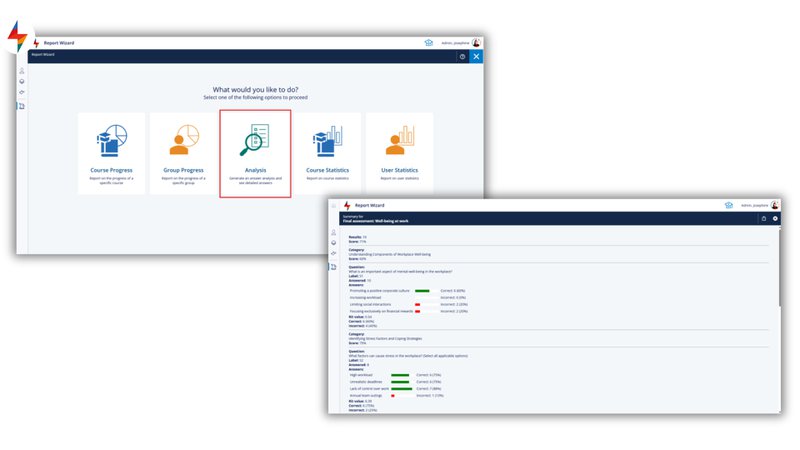
The reports in FLOWSPARKS show exactly where learners get stuck, which questions pose stumbling blocks, and which parts are completed smoothly. With these insights, you can refine your content in a targeted manner.
6. 15 adaptive learning (technology) platforms
When we talk about adaptive learning platforms, we’re actually talking about different types of tools that work together. Some are authoring tools, where you design and build the e-Learning modules yourself, including any adaptive logic inside the content. Others are learning management systems (LMSs) that mainly handle enrolment, delivery, tracking and reporting. Then there are learning experience platforms (LXPs), which focus more on curating content from multiple sources and recommending relevant resources to learners.
In the list below, you’ll find 15 notable adaptive learning technology platforms across these categories. Each approaches adaptivity in its own way, so the “best” choice will depend on your organisation’s context and learning goals.
FLOWSPARKS - #1 adaptive learning platform
FLOWSPARKS is designed for organisations that want to create interactive, adaptive e-Learning at scale, without needing advanced design or technical skills. Each format is grounded in learning science, so creators can focus on meaningful engagement rather than just presentation.
Adaptive learning is built into these formats. With FASTLANE for example, learners start with an intake test to assess prior and then tailors which activities learners must complete; those with high prior knowledge earn exemptions and finish faster. i.e. content and sequence adapt to test results.
Where many other platforms in this list mainly personalise which course or resource someone sees next, FLOWSPARKS goes a step further by making the content, route and testing logic inside a module adaptive through its didactic templates.

2. Docebo
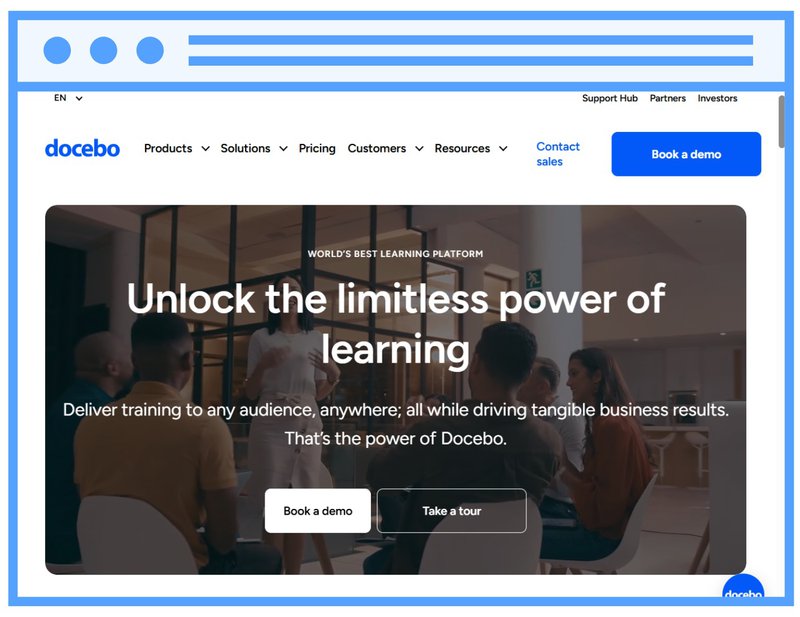
Docebo is an AI-powered learning platform for medium and large enterprises that use it to train employees, customers and partners from a single environment. Its learning suite combines LMS capabilities with AI that analyses learner data. The system then adapts learning paths and experiences to individual behaviour, skill levels and goals. This enables personalised programmes at scale.
On software review sites, customers generally value its rich feature set, but they also point out that Docebo sits at the higher end of the price range and can feel rigid or intricate to configure for advanced scenarios such as complex structures or recurring certifications.
3. Absorb LMS
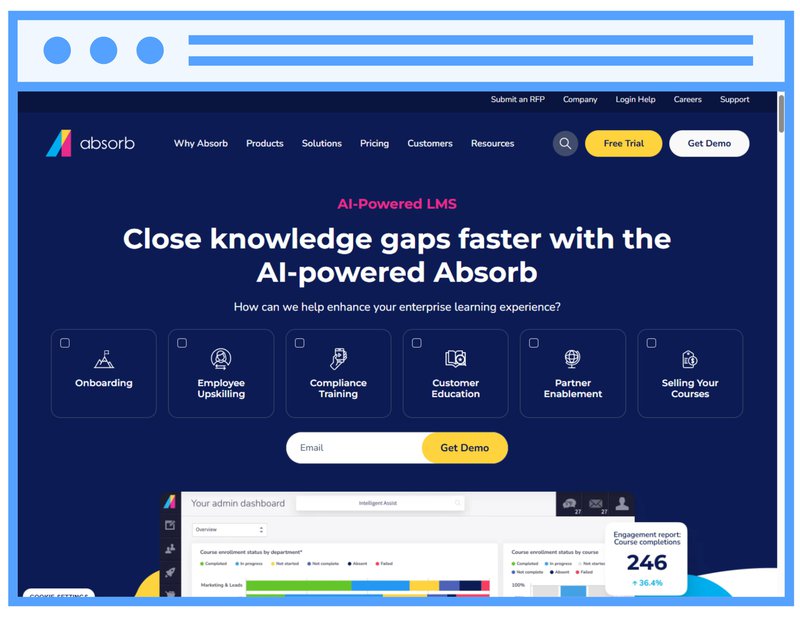
Absorb LMS is a cloud-based learning management system used by organisations to deliver training to employees, customers and partners. It includes AI-driven capabilities such as Intelligent Recommendations and tools for building personalised learning paths, helping learners find relevant courses and, where configured, follow more targeted, adaptive journeys through the content.
Users often highlight Absorb’s modern interface and broad feature set, but they also mention that admin settings can feel overwhelming, that they would like more flexibility and faster performance in some areas, and that workflows such as enrolment or session selection can be confusing or involve too many steps.
4. Rise Up
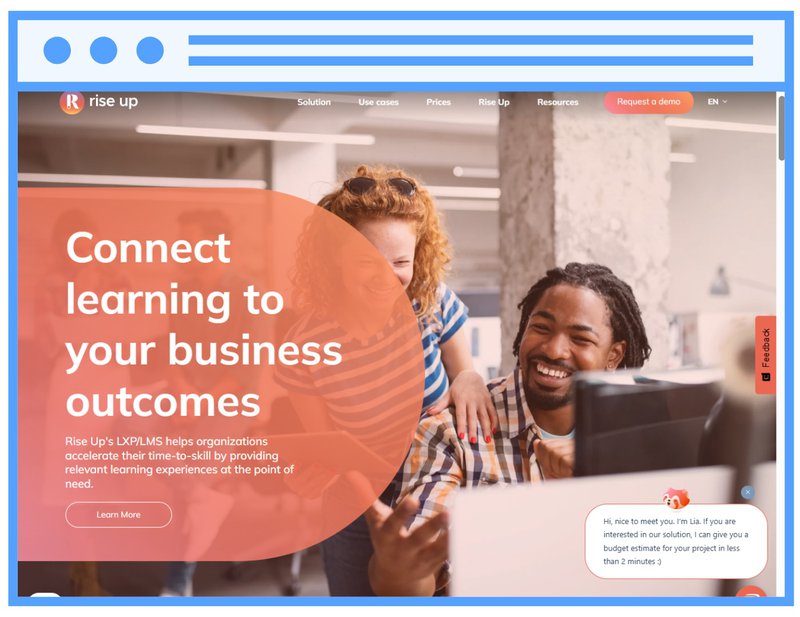
Rise Up is an all-in-one learning platform that combines LMS, LXP and built-in authoring in a single, AI-powered environment. Its adaptive learning technology detects skill gaps, personalises learning paths for different audiences and uses AI (including auto-translation and memorisation features) to reinforce knowledge and reduce time-to-skill.
Users often appreciate its ease of use and integrations, but also mention limits in visual customisation, occasional bugs under heavier usage and a feature set that, while robust, can feel less flexible than some alternatives when you want very tailored branding or advanced configuration.
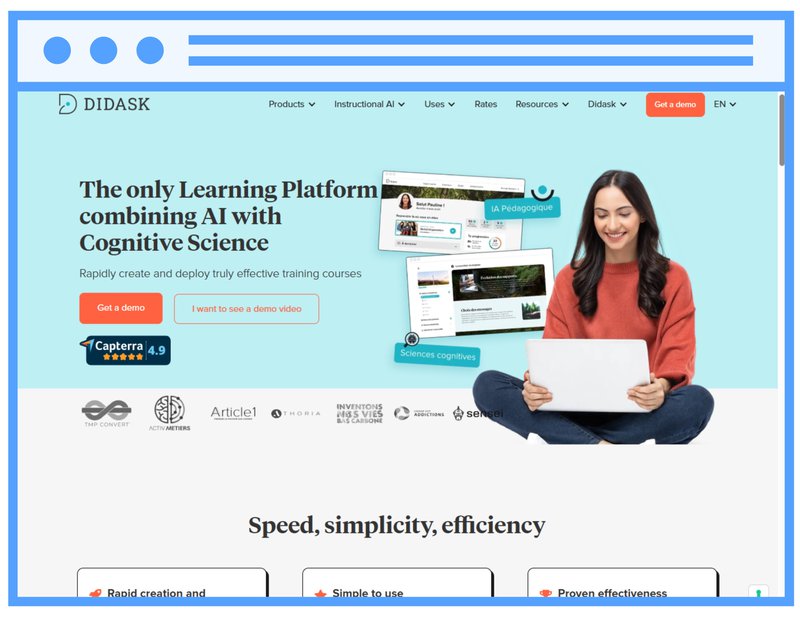
5. Didask
Didask is an LMS that combines AI with cognitive science to help organisations create online training and adaptive learning paths more quickly. Its “Instructional AI” can turn existing content into structured e-Learning modules, while the platform’s adaptive engine personalises courses by adjusting activities and modalities to each learner, aiming to improve engagement and skill development.
Users often like the way Didask guides non-experts through course design and speeds up content creation, but some note that it doesn’t offer all the activity or question types they would expect from a more traditional, feature-rich LMS, occasionally relying on a second authoring tool to fill those gaps.
6. Realizeit
Realizeit is an adaptive learning and training platform that uses AI to continuously personalise learning experiences, connecting content, assessments and learner performance data so learners can skip what they’ve already mastered and focus on genuine knowledge gaps.
It’s often chosen for high-stakes or compliance-heavy training where verified competence is key, but because it works with detailed skill and content models, it can feel like a relatively heavy implementation for organisations that just need straightforward e-Learning delivery.

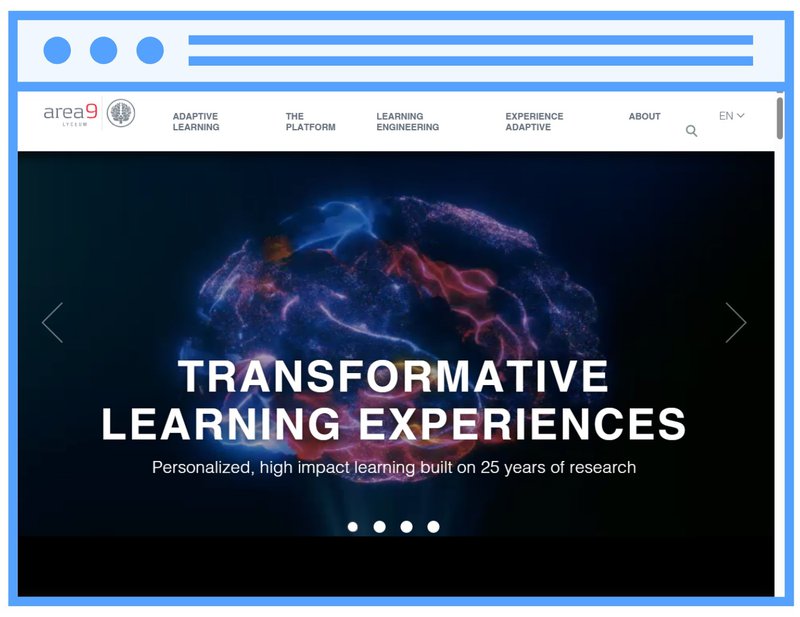
7. Area9 Lyceum
Area9 Lyceum offers Area9 Rhapsode, a cloud-based adaptive learning platform with built-in authoring, delivery and reporting. It uses AI-driven, four-dimensional adaptivity, taking into account knowledge, skills, confidence and other factors, to adjust content, training sequences and reinforcement in real time so each learner follows a tailored path.
Because Rhapsode relies on detailed cognitive models and item-level diagnostics, it tends to suit organisations willing to invest time in structured content design; teams looking for a lighter, template-based tool for quick course roll-out may experience it as a relatively heavy solution compared with simpler authoring-first platforms.
8. Knewton Alta (by Wiley)
Knewton Alta (by Wiley) is an adaptive courseware platform mainly used in higher education, combining openly available content with an adaptive engine that delivers practice, instruction and assessment in one environment. It continually diagnoses each learner’s knowledge, fills gaps with just-in-time explanations and adjusts the sequence and difficulty of assignments to support true mastery of each objective.
Because Alta is designed around structured curricula and academic subjects, it’s a strong fit for maths, science and other standardised courses, but less suited to organisations that need fully custom corporate content, rich branding options or broad e-Learning authoring beyond its predefined course structures.

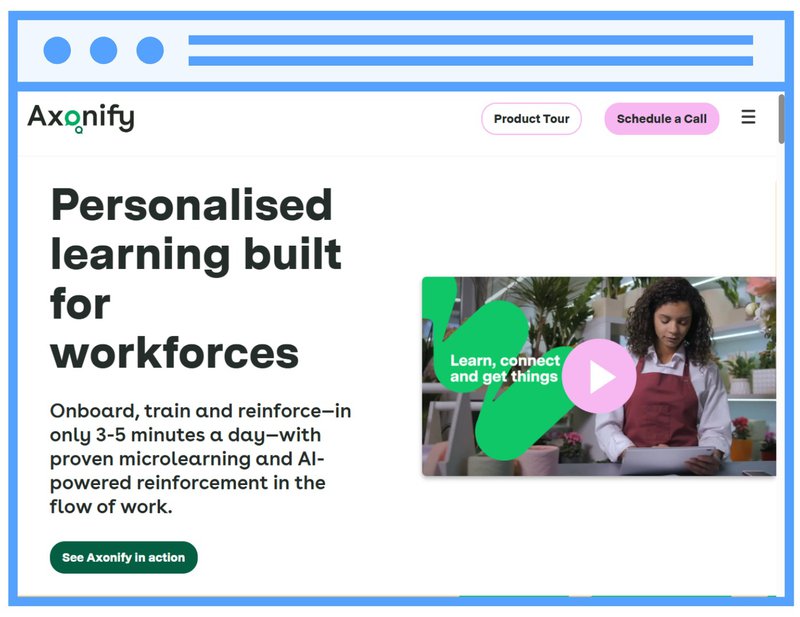
9. Axonify
Axonify is a frontline-focused learning platform that combines AI-based adaptive learning, daily microlearning and task management for employees in retail, logistics and other operational roles. Its adaptive algorithm tracks each employee’s progress over time and delivers short, personalised training sessions—typically 3–5 minutes a day—to reinforce knowledge, close gaps and keep critical information top of mind in the flow of work.
This strong focus on bite-sized frontline training makes Axonify effective for reinforcement, but also means longer, more complex courses and richer social learning features are less of a natural fit, and users sometimes perceive limits around integrations, rewards options and flexibility for broader learning needs.
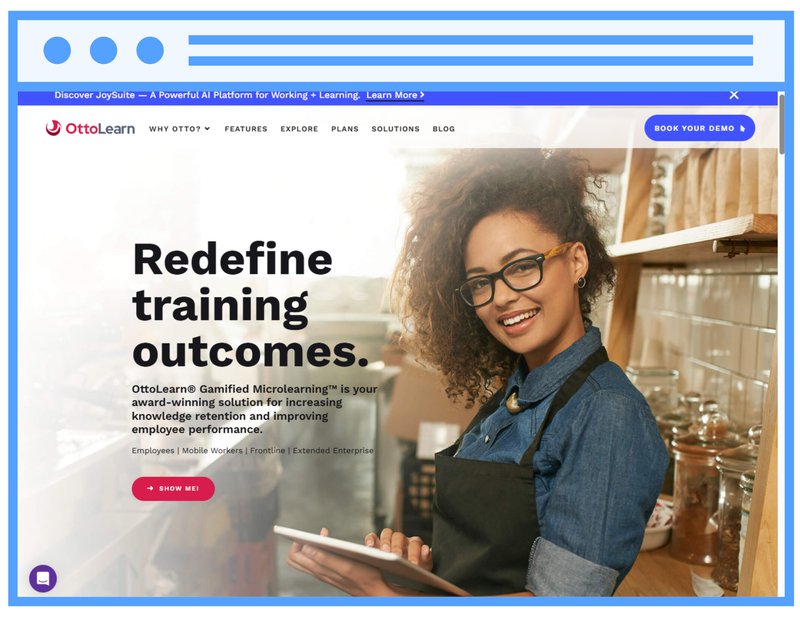
10. OttoLearn
OttoLearn is an adaptive microlearning platform that uses adaptive learning technology to deliver short, gamified training “bursts” that boost engagement and long-term knowledge retention. Its engine combines microlearning, adaptive learning and spaced repetition to personalise each learner’s daily practice, focusing on closing specific knowledge gaps rather than pushing full courses.
This narrow focus on two-minute mastery moments makes OttoLearn effective for continuous reinforcement across distributed teams, but it also means it’s less suited when you need richer, longer-form e-Learning experiences, extensive integrations or detailed visual customisation compared with broader authoring-led platforms.
11. Sana Learn (Sana Labs)
Sana Learn is an AI-native learning platform that brings LMS, LXP, authoring and a virtual classroom together in one system, using adaptive learning and intelligent agents to personalise courses, tutoring and recommendations based on each learner’s progress, role and skills.
That strong AI focus makes Sana Learn attractive for knowledge-intensive, fast-changing environments, but it also comes with enterprise-oriented pricing and, according to comparisons and user feedback, some limits around visual customisation and data connectivity that can be felt as constraints if you want very specific branding or deep, bespoke integrations.

12. Quicklrn
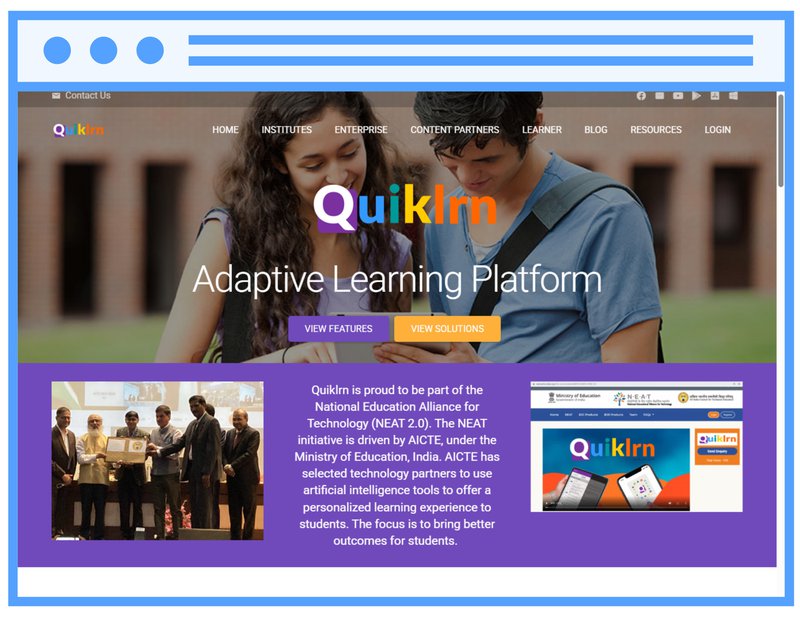
Quiklrn is a cloud-based adaptive learning platform used by academic institutions and enterprises, combining course and content management with AI-driven tools to build outcome-based, personalised learning paths and digital exams for large numbers of learners.
Its focus on accreditation workflows, exam management and publisher-integrated e-books makes it a practical choice for formal education settings, but the mobile app in particular receives mixed feedback on usability and stability, and the overall experience can feel more like a structured academic system than a flexible, design-led e-Learning environment.
13. Duolingo
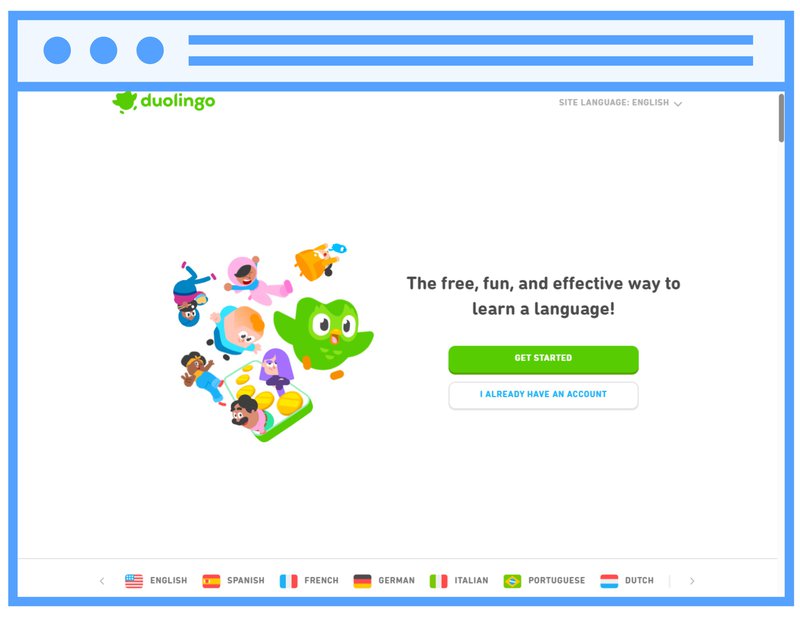
Duolingo is a gamified language-learning app that uses AI and adaptive algorithms to personalise lessons in real time. As learners work through bite-sized exercises, the system tracks their performance and adjusts the difficulty and sequence of later items, keeping practice in a “just right” zone of challenge, with additional personalised practice via features like the Practice Hub.
It’s widely seen as an accessible way to build daily language habits and core vocabulary, especially for beginners, but reviews and independent write-ups often note that exercises can become repetitive, speaking practice and real-life communication remain limited, and course quality varies noticeably between languages—so many learners eventually treat it as a supplement rather than a complete solution.
14. Prodigy Math
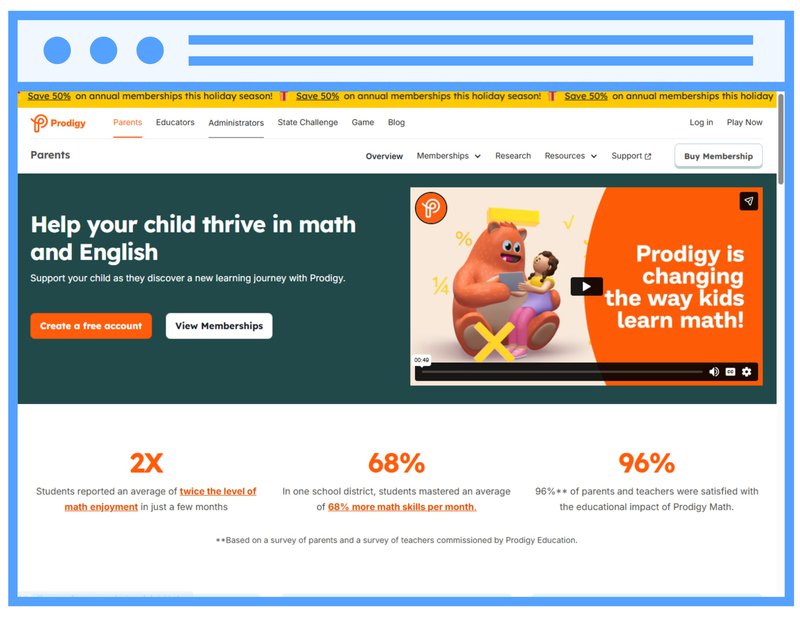
Prodigy Math is a game-based, adaptive maths platform for primary and middle school students that adjusts question difficulty based on how each learner is performing. As children play through its fantasy-style game world, the system continually targets curriculum-aligned skills at the right level of challenge, using in-game questions to diagnose strengths and gaps while teachers get dashboards with progress and curriculum coverage.
It’s often perceived as highly motivating for younger learners thanks to its game mechanics, but many parents and teachers also note that the free version feels limited, gameplay rewards can sometimes overshadow focus on the actual maths questions, and older or more advanced students may outgrow the style and depth of practice relatively quickly.
15. Embibe
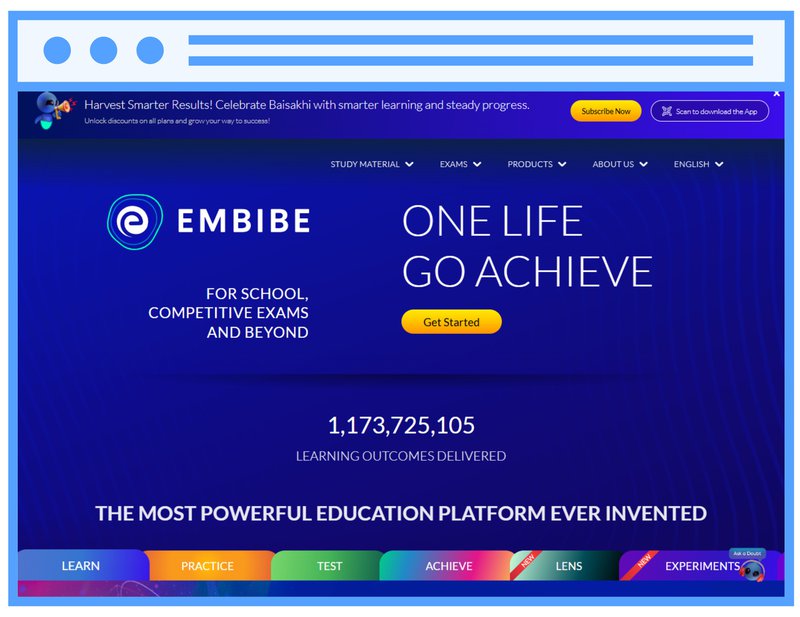
Embibe is an AI-powered adaptive learning platform that uses adaptive learning technology to support school and competitive exam preparation, mainly for Indian curricula. Its “adaptive practice” engine applies deep knowledge-tracing algorithms to personalise practice paths, breaking questions into dozens of tagged elements and serving items based on each student’s mastery level, with 3D videos, simulations and an AI mentor layered on top of the practice experience.
That exam-centric, data-heavy design makes Embibe particularly strong for intensive test prep, but also means it’s less of a general-purpose e-Learning platform. Reviews and discussions indicate that while much content is free, key features sit behind paid plans, and users sometimes encounter issues such as question mistakes or delays in test results.
7. How to choose adaptive learning software
When you want to implement adaptive learning, choosing the right software is crucial. Not every tool offers the same flexibility, automation, or ease of use.
1. Level of adaptivity
A good starting point is to determine how much adaptivity you really need. Do you need fully personalized learning paths based on intake tests? Then you should look for software that supports intelligent decision trees and automatic content selection. Would you rather build scenarios, branches, or logical routes? Then it is important that the tool offers an intuitive interface that allows you to create branches without technical knowledge.
2. User-friendliness
Next, user-friendliness plays a major role. Tools that are too complex slow down production and make it difficult to quickly test or adjust content. A platform that is easy to learn and use speeds up the feedback loop and increases the quality of your end product.
3. Compatibility and scalability
Compatibility and scalability are also important. If you’re using a tool to create e-Learning, it should work seamlessly with your LMS, deliver clear reports, and be able to grow with your learning programs. Think of SCORM, xAPI, multi-device support, and the ability to rearrange or expand modules without having to rebuild everything.
4. Reporting capabilities
In addition, you want your tool to provide insight into learning data. A platform that clearly shows where learners drop out, what choices they make, and which components have the most impact helps you further refine adaptivity. Data is the fuel that allows you to make targeted improvements.
Tools such as FLOWSPARKS combine these elements in practice. You can build intake-driven learning paths with FASTLANE, develop scenarios via SMARTGAME, flexibly organize microlearnings, and use reports to optimize your programs step by step. But the most important thing remains: choose a tool that supports your vision of learning and that makes it easy to bring adaptive principles to life.
8. Best practices for making adaptive learning successful
Adaptive learning offers enormous opportunities, but success is not always guaranteed. It's not just about technology; it's also about how you use it. Here are some best practices that make a difference:
1. Start with clear learning objectives
Without clearly defined goals, it is impossible to use adaptivity effectively. Determine in advance which behaviors or skills you want to influence, so that every interactive exercise and scenario is focused on this. This prevents participants from clicking through modules without retaining anything.
2. Use short, targeted microlearnings
Adaptive systems work best when content is bite-sized and flexible. Short modules encourage autonomy and motivation: participants follow what is relevant to them at their own pace. This not only increases engagement, but also increases the likelihood that new knowledge will actually be applied in practice.
3. Incorporate interactive exercises
Adaptivity only works if learners actively practice with the content. Scenarios/simulations make abstract knowledge concrete and help participants try out new behaviors in a safe environment. Activities such as the SMARTGAME in FLOWSPARKS are ideal for this: participants immediately see the consequences of their choices and receive context-specific feedback.
4. Monitor data and make adjustments
Use your platform's reporting and analysis capabilities to see where participants get stuck, what choices they make, and which components are most effective. Data is the fuel for continuous improvement. This allows you to optimize learning paths and implement new insights immediately.
5. Ensure a cyclical process of testing and improvement
Adaptive learning is not a one-time activity. Test new modules, collect feedback from learners, adjust content, and repeat this process. This will keep your training up to date, effective, and tailored to the real needs of your target group.
6. Involve SMEs and end users early on
By involving experts and actual users from the outset, you can be sure that content is relevant and realistic. This not only increases quality, but also participant motivation: they see that the training is practically applicable in their work.
By following the above practices, you turn adaptive learning from an experiment into a structurally powerful tool that changes behavior and stimulates motivation. Tools such as FLOWSPARKS also make this achievable for teams that do not have complex programming knowledge, allowing you to quickly offer interactive, personalized learning experiences.
9. The state of edtech and adaptive learning platforms
Interest in adaptive learning has grown steadily in recent years. Whereas it used to be tested mainly in academic contexts, today we see organizations, from large companies to nonprofits, actively looking for ways to make training more personalized and relevant. The rising expectations of learners play a major role in this. No one wants to click through a standard course that does not take into account prior knowledge, role, or pace. Adaptivity fits perfectly with this need for customization.
In the global edtech market, adaptive learning has evolved from a “nice-to-have” to a competitive advantage. More and more platforms are integrating elements such as real-time feedback, data-driven recommendations, and dynamic learning paths. Some players are investing in AI, while other systems, such as FLOWSPARKS, make adaptive principles accessible to teams that want to offer a personalized learning experience without complex technology.
This combination of growing demand, technological advances, and higher expectations is ensuring that adaptive learning is becoming a permanent fixture in modern L&D strategies. And that's not hype, but a logical evolution. Because the better the content matches the learner, the greater the impact on motivation, behavior, and results.
Next to adaptive learning, future L&D strategies are increasingly shaped by broader e-Learning trends such as AI, skills-based learning and data-driven design, which we explore in more detail in following article: Stay ahead of the curve: 10 Game-changing L&D trends in 2025.
10. FAQ
⚡ What is adaptive learning technology?
Adaptive learning technology automatically adjusts the learning experience based on the learner's knowledge level, pace, and performance. The content, feedback, and order of modules change accordingly, so that each participant receives a personalized and relevant learning path.
⚡ What is an example of adaptive learning?
One example is an e-Learning program in which a short intake test determines which modules you need to take and which you don't. Branching scenarios in which your choices lead to different routes or feedback are also forms of adaptive learning.
⚡ What are the best adaptive learning platforms?
The best platform depends on your goals and audience. FLOWSPARKS is a strong option for organisations that want scalable, adaptive e-Learning for workplace training. Other platforms, like Knewton Alta or Realizeit, may fit academic settings where learners follow a fixed curriculum.
.avif)
Are you looking to step up your digital training efforts
inside your organization?
Schedule a demo and discover how FLOWSPARKS helps create and deliver engaging e-Learning experiences backed by strong instructional design principles in multiple languages without a hassle.
More interesting reads
.avif)
Best learning management systems in 2026: a practical guide to choosing the right one
Top 10 e-Learning authoring tools in 2026 (ranked for real behavior change)