Etex's Success
Playbook
Playbook
Train to retain: how Etex scaled knowledge transfer on the factory floor

What you'll learn
What you'll need
THE CHALLENGE
Etex is a global manufacturer of sustainable building materials with over 13,000 employees across 45 countries. In Belgium alone, the company runs 4 production sites and a headquarters, employing hundreds of blue-collar workers with deep technical knowledge of highly specialized machinery.
However, they were facing a critical operational risk: nearly 75% of the blue-collar workforce in the Kapelle-op-den-Bos factory would leave the organization within five years, due to retirements, job changes, and pandemic-era reshuffling.
The company needed to onboard and upskill large groups of new workers fast, without interrupting production or compromising on safety. However, the traditional method of observing other colleagues on the job (shadowing) was too slow, too inconsistent,and generally inefficient.
At the same time, Etex wanted to retain decades of critical knowledge held by experienced employees, many of whom were about to leave. And in a production-heavy environment, downtime for training was not an option.
“We couldn’t afford to shut down machines just to train people.” Patrick explains. “But we also couldn’t afford the risks of poorly trained staff.”
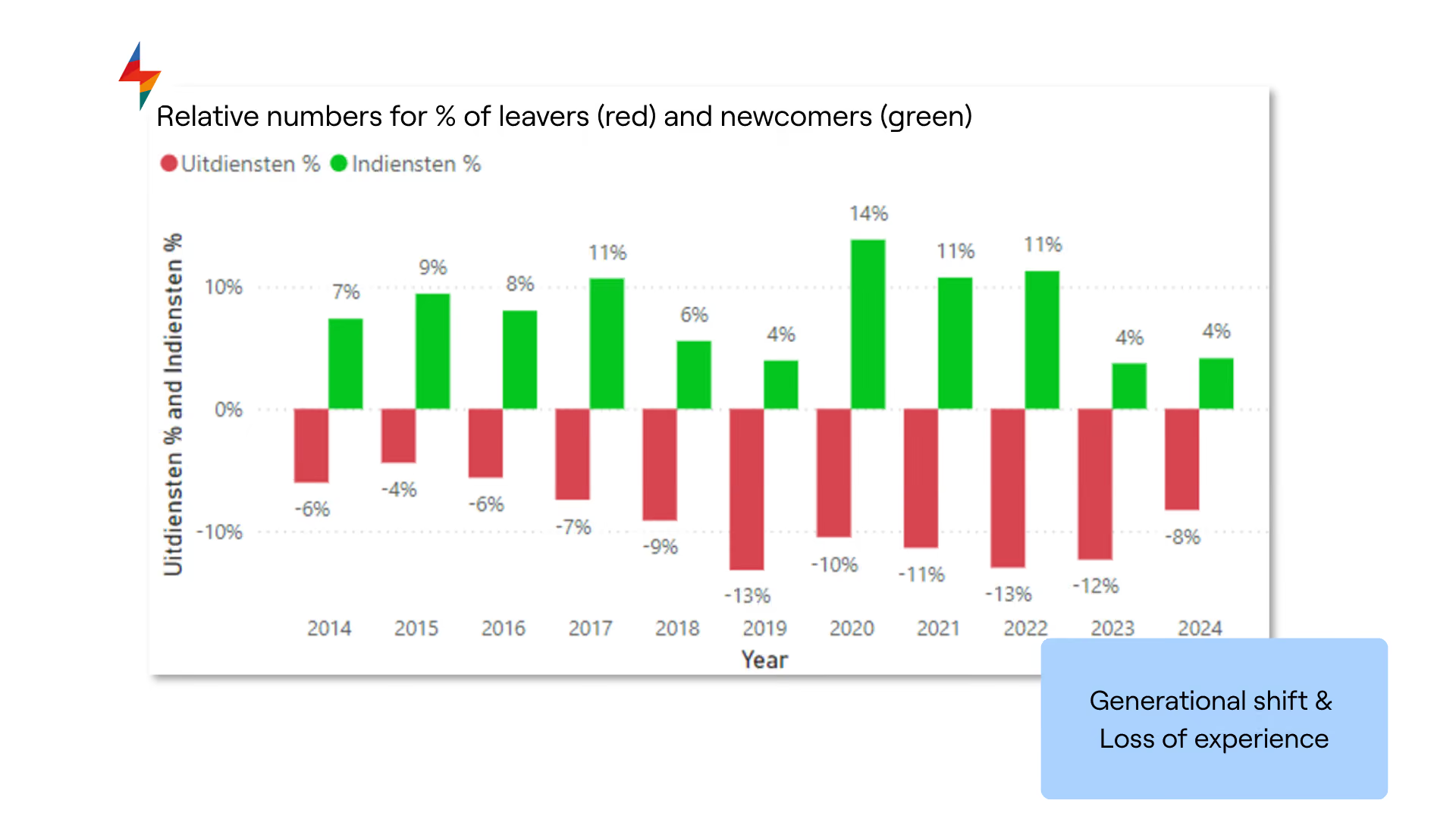
Other key challenges included:
⚡️Training outcomes were inconsistent, and skill levels were hard to track without a centralized system.
⚡️Many shop-floor employees were hesitant to adopt digital tools, creating resistance to change.
⚡️Scrap (defective, damaged, or unusable materials that are discarded) were high due to improper machine cleaning, resulting in rising costs.
⚡️Multiple safety incidents occurred because of ineffective onboarding training.
THE VISION
Faced with massive workforce changes, Etex set out to future-proof its learning strategy. They recognized that they needed to do more than just replace outgoing workers; the focus should be on retaining operational knowledge, improving safety, and making training efficient and cost-effective. Just as important, the team wanted a system that could support learning that happens in the flow of work, not outside of it by pulling people out for long sessions.
“The feedback from operators was clear: They want no more than 20% of learning in the classroom. The rest needs to happen on the floor”, Patrick explained.
By tailoring the learning experience to Etex’s employees' preferred learning methods, they ensured that the training was widely embraced by their workers and saw a clear boost in engagement.
THE SOLUTION
Etex built a structured learning system that combines repeat sessions, peer coaching, and visual training. With FLOWSPARKS, the team delivered short and focused training moments, supported by data, tracked with skill matrices, and optimized to fit the rhythm of daily operations on the factory floor.
With the FLOWSPARKS Authoring Tool, Etex was able to:
⚡️Create practical training modules on machine usage, onboarding, and upskilling, using familiar languages and relatable shop-floor visuals such as photos and videos.
⚡️Reuse multilingual content across sites in Poland, Bulgaria, Nigeria, the UK, and Germany, ensuring consistent training while reducing duplication of effort.
⚡️Leverage reporting outputs to strengthen skills matrices and track workforce development across plants.
1. Faster, more reliable onboarding with structured checklists and peer training
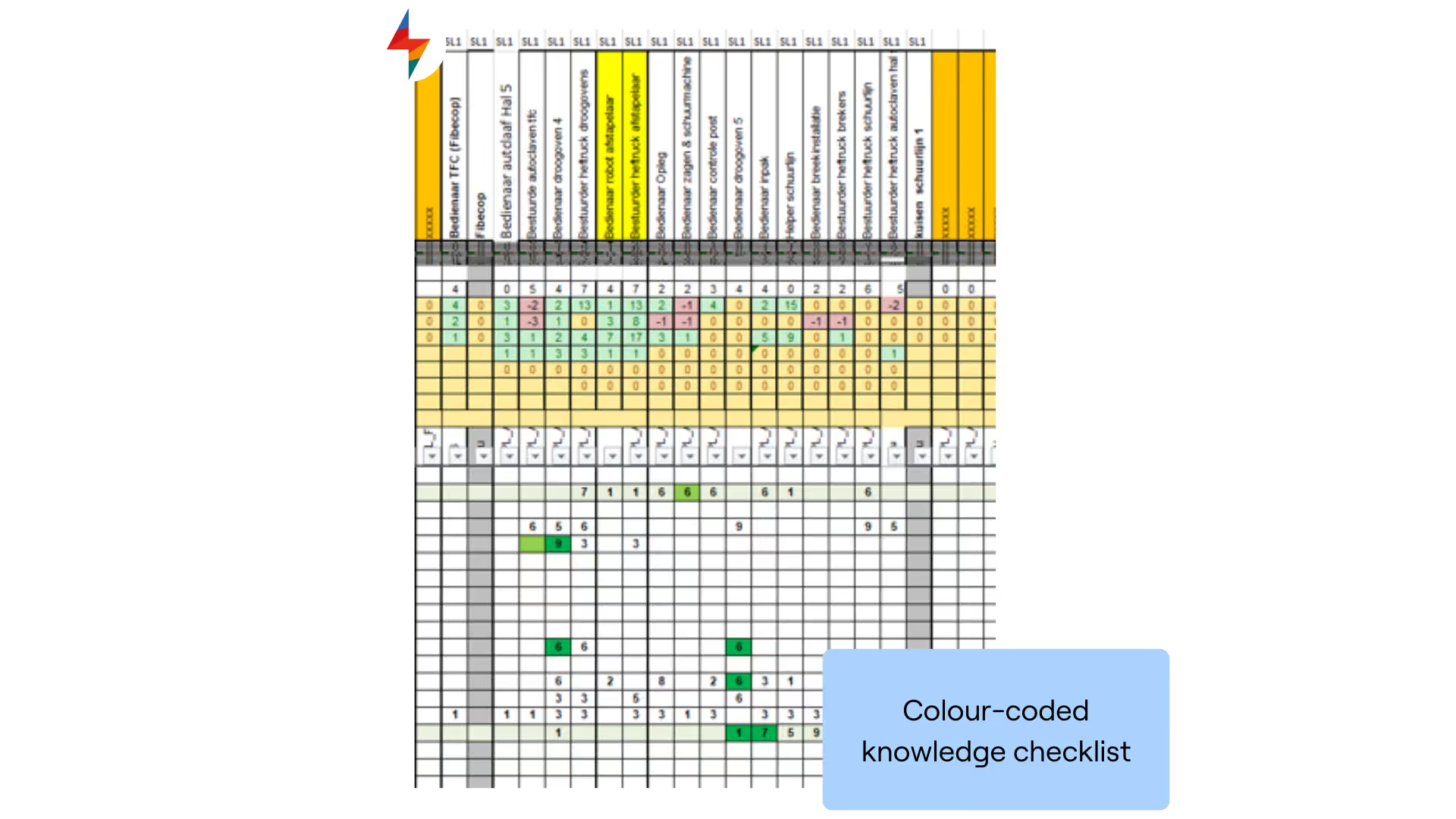
New hires now start with practical FLOWSPARKS modules covering toolboxes, safety standards, and machine-specific procedures. After two weeks on the line, a master trainer uses a colour-coded knowledge checklist to assess their capabilities, highlighting what they’ve mastered and what still needs support.
As Patrick explains:
“Before, it was more than 10 weeks of shadowing and hoping for the best. Now we assess knowledge after 2 weeks, and we know exactly what someone can do.”
The results feed directly into the skills matrix used by team leads to assign roles and identify gaps.
2. Building training with the team using real factory visuals and input
Training is developed using FLOWSPARKS’s didactic templates and co-created with the people who know the work best. Every module uses real images, videos, and terminology from the floor, whether it’s a step-by-step task, a cleaning protocol, or a safety procedure.
“The training content speaks the language of our factory”, Patrick says. “That’s why it works, it’s not generic. It’s real.”
Employees actively contribute to new content, and creating training has become accepted as a natural part of the worker’s daily work.
3. Reinforcing learning with short, targeted ‘boost trainings’
To strengthen retention and drive improvements, Etex runs short ‘boost trainings’ via FLOWSPARKS on specific issues like scrap, cleanliness, or quality. These sessions last about 1 to 1.5 hours and include quizzes followed by refresher trainings over time.
As Patrick recalls:
“We used to run long sessions that interrupted production. Now we do quick trainings that focus on one topic specifically.”
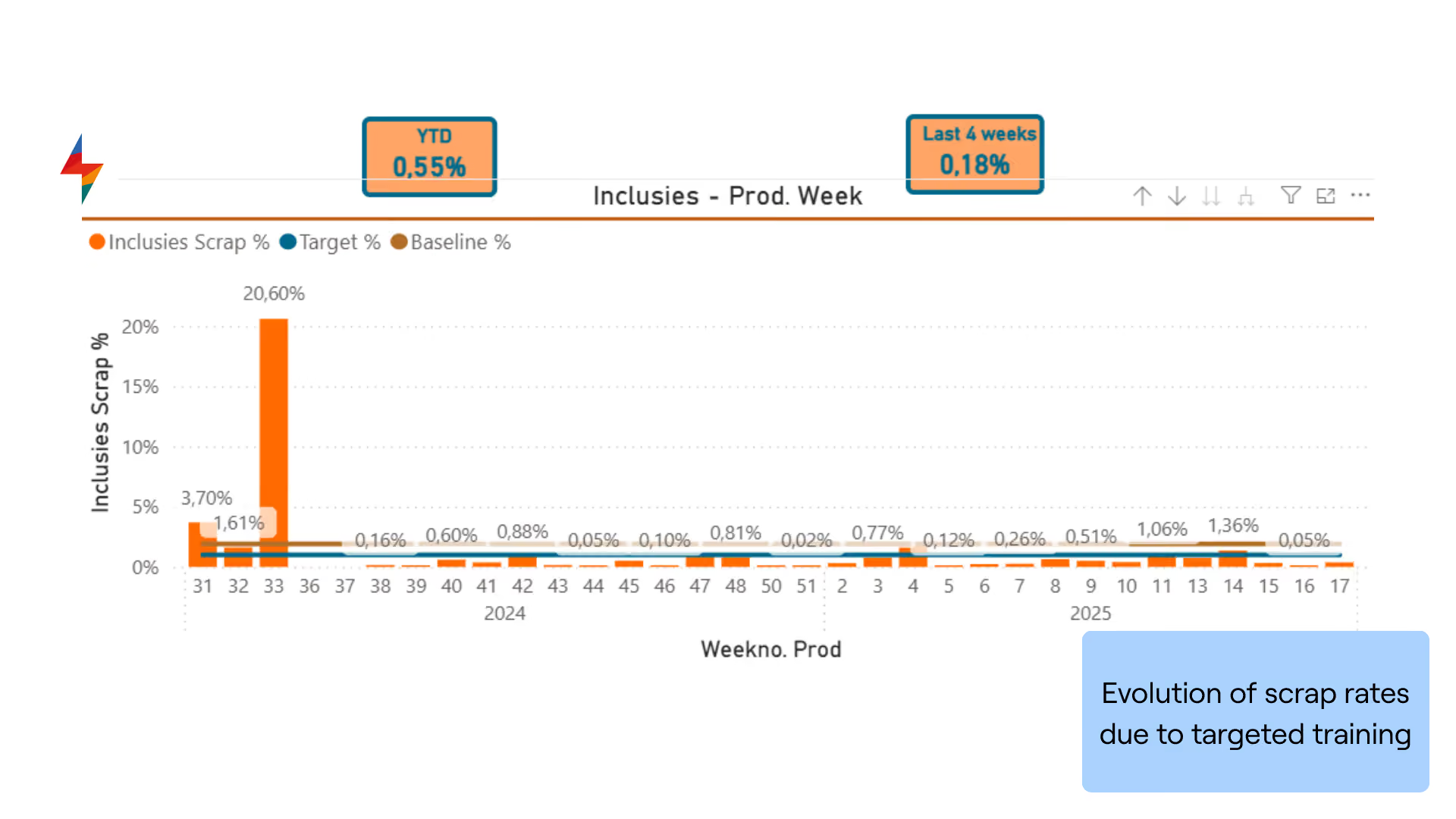
Results are then monitored over time. This learning approach with the training on machine cleaning led to a sharp reduction in costs and product scrap.
“When trained people clean machines, we see fewer inclusions. If they’re not trained, scrap goes up. It’s that simple”, Patrick says.
4. Closing skill gaps in real time with a living skills matrix
Training progress is captured through alive skills matrix that’s updated daily. Scores are based on FLOWSPARKS checklist completion and on-the-job performance, giving managers an immediate view of team readiness.
As Patrick puts it:
“The matrix isn’t just a compliance checklist; it drives our planning, our training, and our conversations.”
It also supports long-term growth. Employees regularly discuss their next steps in one-on-ones, and each positive check on the matrix signals someone being capable of expanding.
“Every green dot in the matrix means someone’s ready to grow. Every gap is an opportunity to train.”
THE IMPACT
Etex’s approach to training didn’t just fix immediate challenges; it delivered measurable business impact across operations, efficiency, and culture.
One of the biggest wins was time. By restructuring onboarding, the company cut its annual training hours by approximately 10,000, down from 25,000 to 15,000. That time is now redirected to production and other value-adding work.
Targeted training on machine cleaning also led to a dramatic drop in scrap rates, going from about 5% to under 1%. With each percentage point worth around €500,000, the savings are substantial.
That same proactive mindset and effective training method helped accelerate operational ramp-ups. On a recent €10 million machine implementation, the team reached full operational efficiency in just seven months; a process that usually takes a year or longer.
Just as significant is the cultural shift. Training has evolved from a point of resistance to a daily practice, embraced by employees across the board.
“There was resistance at first. But now, everyone sees training as part of the job and wants to be part of it.”
Etex’s shift to decentralized, visual, and data-driven training cut hours from onboarding, slashed scrap rates, and accelerated machine ramp-ups. All while securing decades of operational knowledge for the future.
.avif)
Are you looking to implement digital learning within your organization?
Is your organization looking to implement a SaaS learning platform that is conform with the latest security requirements? Request your free demo here to see what FLOWSPARKS can do for you.